Quick Takeaways
- There is no single calendar that every family follows for these ceremonies.
- Namkaran may happen within weeks of birth, while Annaprashan is commonly planned around six months.
- Mundan may be performed between the first and third year.
- The practical preparations differ too, depending on whether the ceremony involves naming, feeding, or a ritual haircut.
- Parents should confirm the date with their Pandit.
- Kashishakti accepts requests for all three ceremonies.
Namkaran, Annaprashan, and Mundan may all take place during a child's early years, but they belong to different moments in that journey. Namkaran is connected with formally giving the baby a chosen name. Months later, Annaprashan may introduce solid food through a family ritual. Mundan has a separate purpose again, with the child's first ritual haircut observed in traditions that follow the ceremony. Their timing does not come from one calendar. Family practice may determine one date, regional custom another, and the Pandit's guidance can affect both. The same variation applies to ritual steps and required samagri. A family planning these Hindu baby ceremonies therefore needs to check each one on its own terms before confirming dates, purchases, or other arrangements.
Why Are These Three Hindu Baby Ceremonies Planned Differently?
A single checklist does not work well across all three rituals because the practical requirements change with the ceremony. Birth details may be needed during a Namkaran ceremony when the Pandit provides naming guidance. With an Annaprashan ceremony, preparation moves toward the ceremonial food and feeding setup. A Mundan ceremony introduces another arrangement altogether: the child's ritual haircut must be coordinated with the puja.
The location can affect preparation as well. Namkaran may be conducted at home. Mundan may require a temple or another suitable venue. The number of guests can change seating plans, meal arrangements, and the overall duration.
Treating all three as the same planning exercise can therefore leave important details uncovered. Namkaran needs naming decisions. Annaprashan needs feeding arrangements. Mundan needs haircut coordination. A checklist prepared for one ceremony may not cover what another requires.
Namkaran: What Parents Need to Decide Before the Ceremony
The Namkaran puja centers on formally giving the child a chosen name. The selection process can involve birth details as well. In traditions that consider nakshatra or rashi, those details may influence the name or its starting sound.
Before booking, parents should settle four practical details:
- The baby's exact birth date, time, and place when the Pandit requires them.
- A chosen name or preferred starting sound if either has been decided.
- Regional tradition and ritual language.
- Venue, guest numbers, and samagri support.
How the name is introduced during the ceremony also depends on family practice. Writing the chosen name in rice forms part of some traditions. In others, the ritual includes whispering the name into the baby's ear. The family should confirm its preferred method with the Pandit before the ceremony.
Guest size remains a separate decision from the naming ritual itself. A baby naming ceremony can be kept small, particularly during the newborn stage. Parents may prefer close family only, depending on recovery, newborn comfort, and how they want to celebrate.
Annaprashan: What Parents Need to Arrange Around the First Feeding
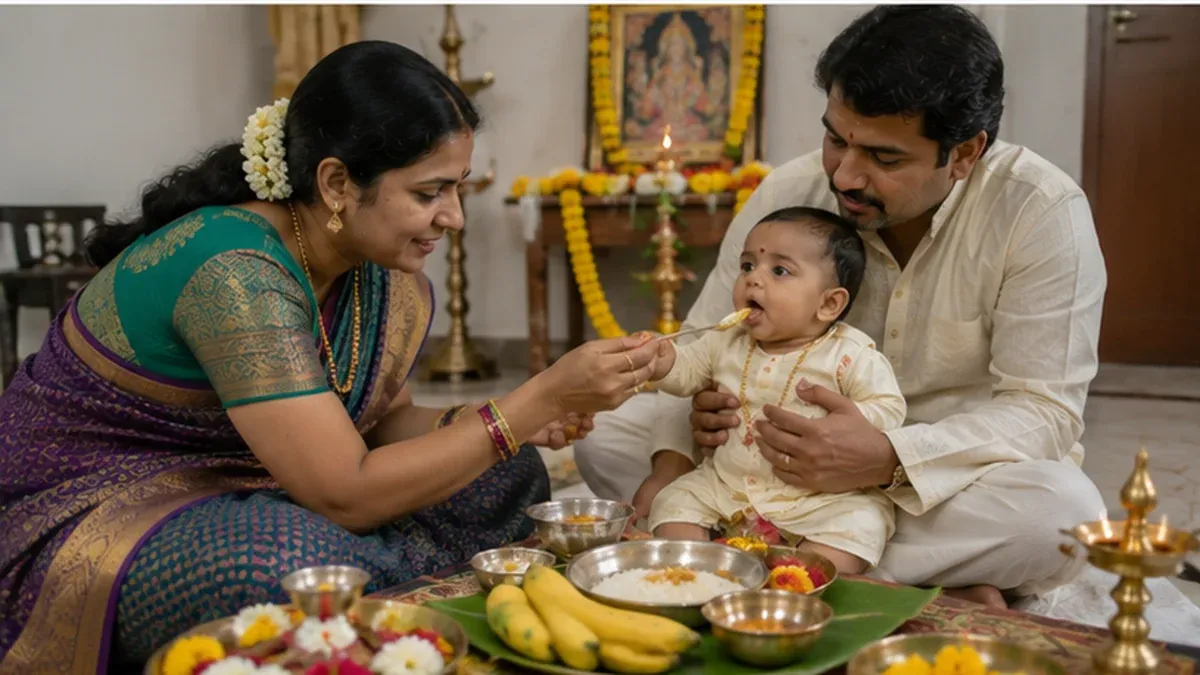
The Annaprashan ceremony needs one decision that earlier rituals do not. Parents must decide what the baby will actually taste. The ceremonial portion should suit the child’s current feeding stage. The World Health Organization recommends safe complementary foods from around six months. Food should also be prepared hygienically and served with clean utensils. For the first rice ceremony, keep these arrangements separate from general puja preparation:
- Confirm the ceremonial food before the puja begins.
- Keep a clean bowl and spoon ready.
- Prepare only a small baby-appropriate tasting portion.
- Keep guest food separate from the baby’s serving. Follow pediatric advice for ingredients already being introduced. In many families, the food is first offered during the puja. The baby then receives a symbolic first mouthful. Regional practice may decide which relative gives that first serving. The Annaprashan puja may also include standard ritual materials. Those items should not be confused with the baby’s feeding requirements. Parents should confirm both lists before purchasing anything.
Mundan: What Needs Extra Attention Beyond the Puja
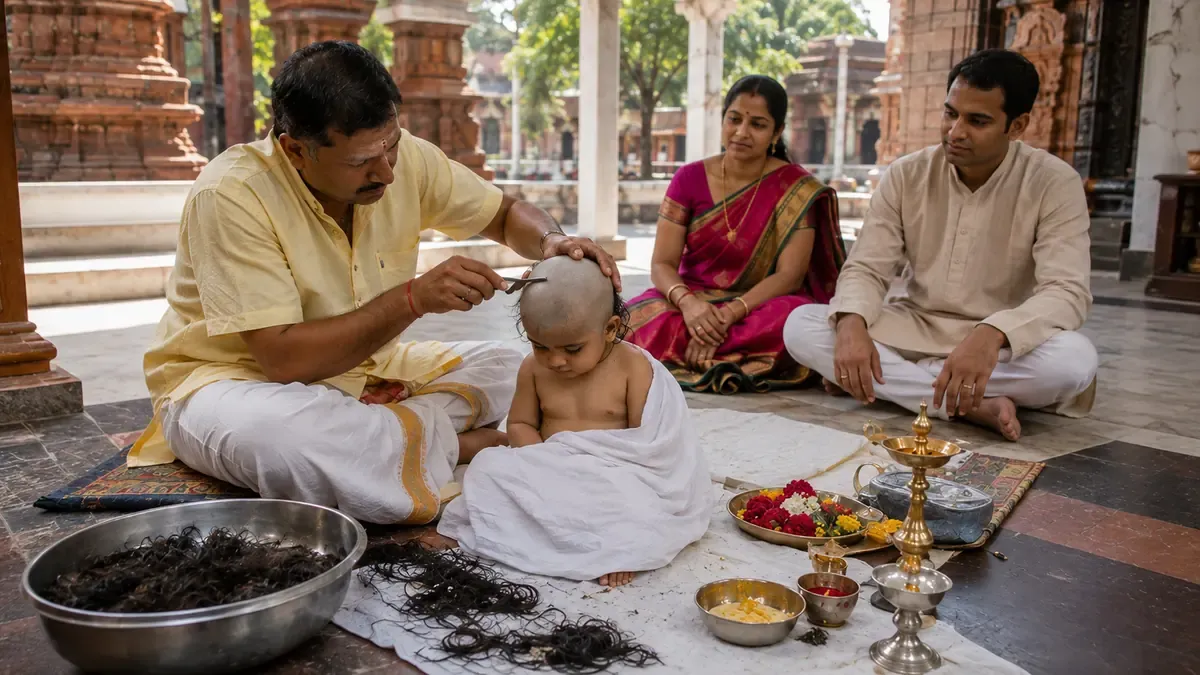
The Mundan ceremony adds a practical task absent from earlier baby rituals. Someone must arrange the actual haircut separately from the puja. Parents should check these points before the first haircut ceremony:
- Arrange a barber experienced with young children.
- Ask for a new single-use blade.
- Keep clean clothes ready for loose hair.
- Decide how the removed hair will be handled.
- Carry fresh clothes for the child afterward.
- Protect the shaved scalp from direct sunlight. Clean instruments deserve particular attention during the haircut. A reused blade can create avoidable infection risks. Health experts specifically recommend a sealed, single-use blade for Mundan. Temple ceremonies may follow their own tonsure process. Check the temple procedure before arranging an outside barber. The child may also become restless during shaving. A familiar lap, small gathering, and favourite distraction can make coordination easier.
Do You Need a Different Pandit for Each Baby Ceremony?
A family does not automatically need a different Pandit for every ceremony. The practical question is whether the Pandit performs that specific sanskar correctly. Language and regional practice also need to match the family’s preference. A suitable Pandit for baby ceremony bookings should be comfortable with:
- The required sanskar and its ritual sequence
- The family’s regional or community practice
- The preferred language during explanations
- Havan requirements, where included
- Ceremony-specific samagri instructions The same Pandit may conduct Namkaran, Annaprashan, and Mundan if these requirements match. Families can also choose another Pandit for a later ceremony. Hindu customs vary across regions, and ritual details can change accordingly. Confirm the exact ceremony before making the booking. Previous familiarity with the family can be useful, but relevant ritual experience comes first.
Planning the Next Baby Ceremony Without Starting From Zero
Parents can keep a short ceremony record after each of these Hindu baby ceremonies. The record saves useful details that may be needed again later. Keep these details together:
- Baby’s birth date, time, and place
- Family’s preferred ritual language
- Regional or community tradition followed
- Pandit details from the previous ceremony
- Samagri items already available at home
- Venue access information for home bookings
- Any ritual preferences confirmed by family elders Do not reuse an earlier samagri list for another ceremony. Namkaran, Annaprashan, and Mundan require different ritual items and arrangements. Previous notes are useful for family preferences, not as a replacement checklist. Keeping these details together also reduces repeated discussions before the next ceremony. Parents can begin with information already confirmed within the family.
Request Namkaran, Annaprashan or Mundan Through Kashishakti
The booking starts with the ceremony itself. Once parents tell Kashishakti whether they are planning Namkaran, Annaprashan, or Mundan, the remaining details can be collected around that ritual. A request for a Namkaran Pandit in Noida may need the baby’s birth details. For an Annaprashan Pandit in Noida, mention the intended feeding date and how the family plans to conduct the first feeding. A Mundan Pandit in Noida request should also explain where the haircut will happen and who is arranging it.
Baby Ceremony Booking Brief
- Ceremony: Namkaran / Annaprashan / Mundan
- Baby's age: [Add age]
- Preferred date: [Add date]
- Preferred time or muhurat: [Add preference]
- Location: [Add locality and city]
- Venue: [Home / Temple / Other]
- Preferred language: [Add language]
- Family tradition: [Add details if relevant]
- Havan required: [Yes / No / To confirm]
- Samagri support: [Full / Partial / To discuss]
- Expected guests: [Add approximate count]
- Additional requirement: [Add details]
- Parent contact: [Add contact details] Kashishakti accepts requests from Noida, Greater Noida, and Ghaziabad. Confirmation depends on the selected ceremony, date, venue, travel requirements, and a suitable Pandit being available. Discuss your baby ceremony on WhatsApp: Kashishakti WhatsApp Link Send a ceremony booking request: Baby Ceremony Form Link
Three Ceremonies, Three Different Preparations
Namkaran, Annaprashan, and Mundan belong to different stages of early childhood. Each ceremony therefore needs its own decisions, materials, and practical arrangements. Treating them as separate Hindu baby ceremonies prevents parents from carrying one checklist into the next ritual. Once the family knows which ceremony comes next, planning becomes far more specific. Parents can focus on the requirements connected with that milestone. If your next baby ceremony is approaching, Kashishakti can help arrange the Pandit and required samagri. Discuss your upcoming ceremony: Kashishakti WhatsApp Link Send your booking request: Baby Ceremony Form Link