Key Takeaways
- Keep one basic puja samagri list for home for recurring household worship.
- Add ceremony-specific materials only after the exact puja format is confirmed.
- Fresh leaves, flowers, dairy, fruit, and prasad ingredients need later purchasing.
- Havan, abhishek, Shraadh, and child ceremonies need separate preparation.
- Your Pandit’s final instructions should override any generic pooja samagri list.
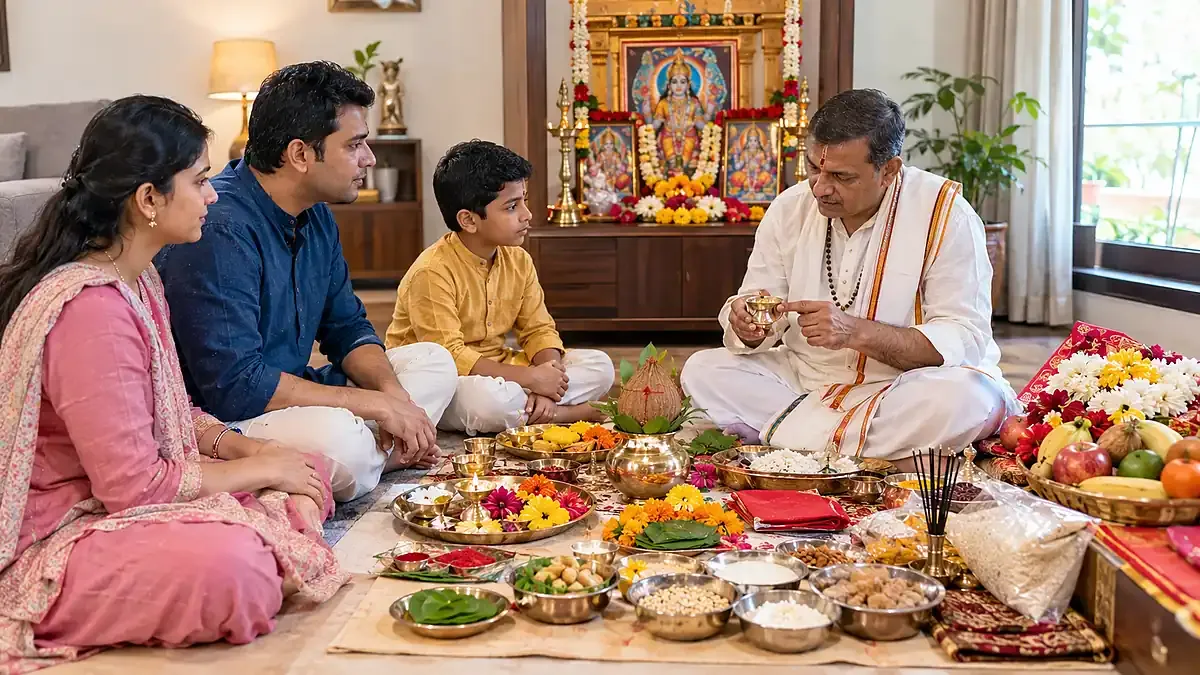
One missing ritual item can delay a puja faster than an entire shopping trip. A reliable puja samagri list should separate everyday essentials from ceremony-specific requirements, because Ganesh Chaturthi, Rudrabhishek, Shraadh, and Namkaran do not follow the same preparation logic. This home puja samagri list brings the shared basics together, then shows the distinct materials each ceremony needs, with Pandit-specific variations kept in view before you begin buying anything unnecessarily.
Common Puja Samagri Used Across Many Home Pujas
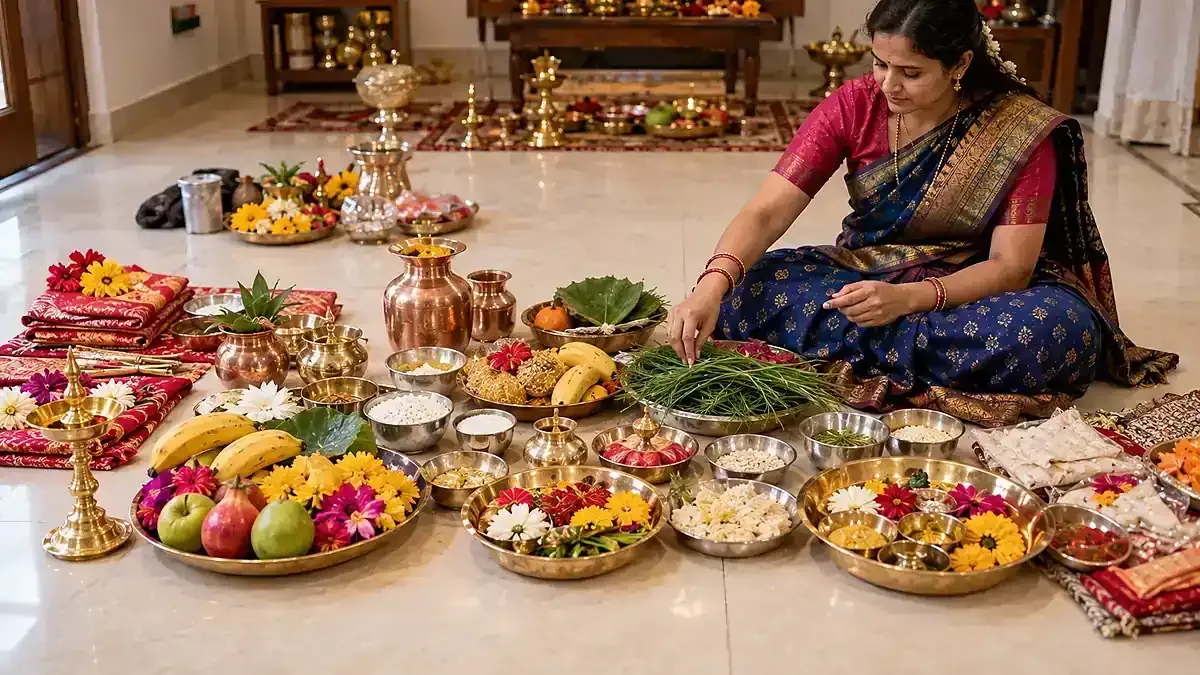
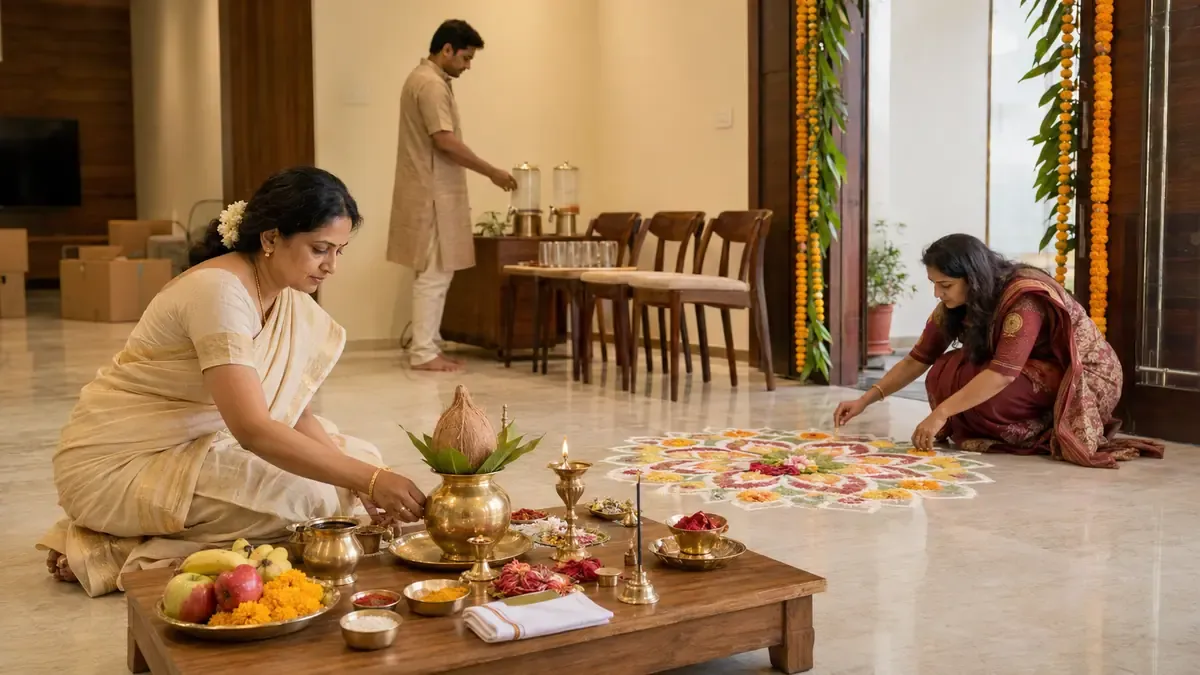
A basic home puja samagri list can cover many household ceremonies. Keeping reusable and dry materials together saves repeated shopping before every puja.
| Category | Common Items | Planning Note |
|---|---|---|
| Reusable setup | Chowki, thali, bowls, lota, spoon, diya, bell, asan | Check what is already available at home |
| Tilak materials | Roli, haldi, chandan, akshat | Small packs can serve several ceremonies |
| Sacred thread | Mauli or kalawa | Keep one usable roll available |
| Light and fragrance | Cotton wicks, ghee or oil, incense, dhoop, camphor | Replace depleted or damaged stock |
| General offerings | Flowers, fruit, coconut, Gangajal | Buy according to the selected ceremony |
| Traditional additions | Betel leaves and supari | Include only when the Pandit requests them |
These are recurring puja items, rather than fixed requirements for all ten ceremonies. Their use and quantity can change with the selected vidhi.
Griha Pravesh Puja Samagri List
A Griha Pravesh puja samagri list needs materials connected with entering and inaugurating the new home. First confirm whether the booking also includes Vastu Shanti, Navagraha Puja, or havan because those additions expand the preparation.
| Distinctive Requirement | Why It May Be Needed |
|---|---|
| Door toran | Used for entrance preparation |
| Fresh milk | Needed for traditional milk boiling where followed |
| New cooking vessel | Used during the first boiling in many families |
| House keys | Kept ready during the entry ritual |
| Havan setup | Added when havan forms part of the ceremony |
| Navagraha materials | Added only when that worship is included |
Dedicated Vastu remedies belong in the Vastu section below.
Ganesh Chaturthi Puja Samagri List
A Ganesh Chaturthi puja samagri list changes with the number of worship days. Sthapana materials are arranged once, but flowers, durva, lamps, and prasad may need replenishment throughout the celebration.
| Ganesh-Specific Item | Planning Requirement |
|---|---|
| Ganesh murti | Choose a size suitable for the home setup |
| Durva | Arrange fresh according to the offering count followed |
| Red hibiscus | Keep fresh flowers available for worship |
| Modak | Separate the deity offering from guest prasad |
| Ganesh vastra | Include when the family dresses the murti |
| Janeu | Add when the selected vidhi requires it |
A multi-day Ganpati needs fresh supplies planned against the actual celebration length. Current Ganesh Chaturthi checklists also separate one-time Sthapana materials from recurring consumables.
Diwali Puja Samagri List
The Diwali puja samagri list here covers Lakshmi-Ganesh Puja on Diwali evening. Dhanteras, Govardhan Puja, and Bhai Dooj need separate preparation and should not be folded into the same checklist. Distinctive materials can include Lakshmi and Ganesh murtis, extra diyas, lotus flowers, kheel, batasha, coins, currency notes, and gold or silver objects where family practice includes them. Business families may also place bahi-khata, account books, cash boxes, or professional records near the altar.
Navratri Puja Samagri List
A Navratri puja samagri list works best when divided by stage. Day-one Ghatasthapana, recurring worship, and Ashtami or Navami preparation require different materials.
| Stage | Distinctive Requirements |
|---|---|
| Ghatasthapana | Clean soil, barley or jau, Kalash setup, red cloth |
| Recurring worship | Fresh flowers, bhog, lamp supplies, incense |
| Akhand Jyoti | Enough ghee or oil and suitable wicks |
| Ashtami or Navami | Kanya Pujan food, gifts, plates, serving items |
| Closing havan | Havan materials only when the ritual includes it |
This stage-based plan separates first-day preparation from recurring supplies. Current Navratri checklists follow the same practical division between Ghatasthapana, continuing worship, and later-stage requirements.
Shraadh Puja Samagri List
A Shraddha puja samagri list should remain separate from a festive puja items list. Shraadh preparation centres on ancestral offerings, tarpan, and pinda requirements instead of deity-focused festival materials.
| Distinctive Material | Ritual Use |
|---|---|
| Black sesame | Used during ancestral offerings and tarpan |
| Kusha or darbha grass | Used in Shraddha and tarpan procedures |
| Rice or barley | Prepared for pinda where required |
| Water vessel | Needed for tarpan |
| White flowers | Used in many ancestral rites |
| Daan materials | Follow family and Pandit instructions |
| Sattvik food | Arrange according to the selected rite |
Annual Shraadh, Pind Daan, and related rites can need different arrangements. Confirm the exact rite before buying a fixed puja kit.
Rudrabhishek Puja Samagri List
A Rudrabhishek puja samagri list is built around liquids and Shiva-specific offerings. Regular altar supplies form only a small part of the preparation.
| Rudrabhishek Material | Planning Note |
|---|---|
| Shivling | Required when the home setup does not already include one |
| Clean water and Gangajal | Used through the bathing sequence |
| Milk, curd, honey, ghee | Common abhishek substances |
| Sugarcane juice | Included in several Rudrabhishek traditions |
| Bilva leaves | Arrange fresh and undamaged leaves |
| Bhasma | Add when the selected practice uses it |
| Dhatura | Include only where the family tradition follows it |
| Abhishek vessel | Needed for controlled pouring |
Large liquid quantities should follow the Pandit’s planned sequence because Rudrabhishek formats can differ. Current Rudrabhishek lists consistently separate these abhishek substances from ordinary altar supplies.
Mundan Puja Samagri List
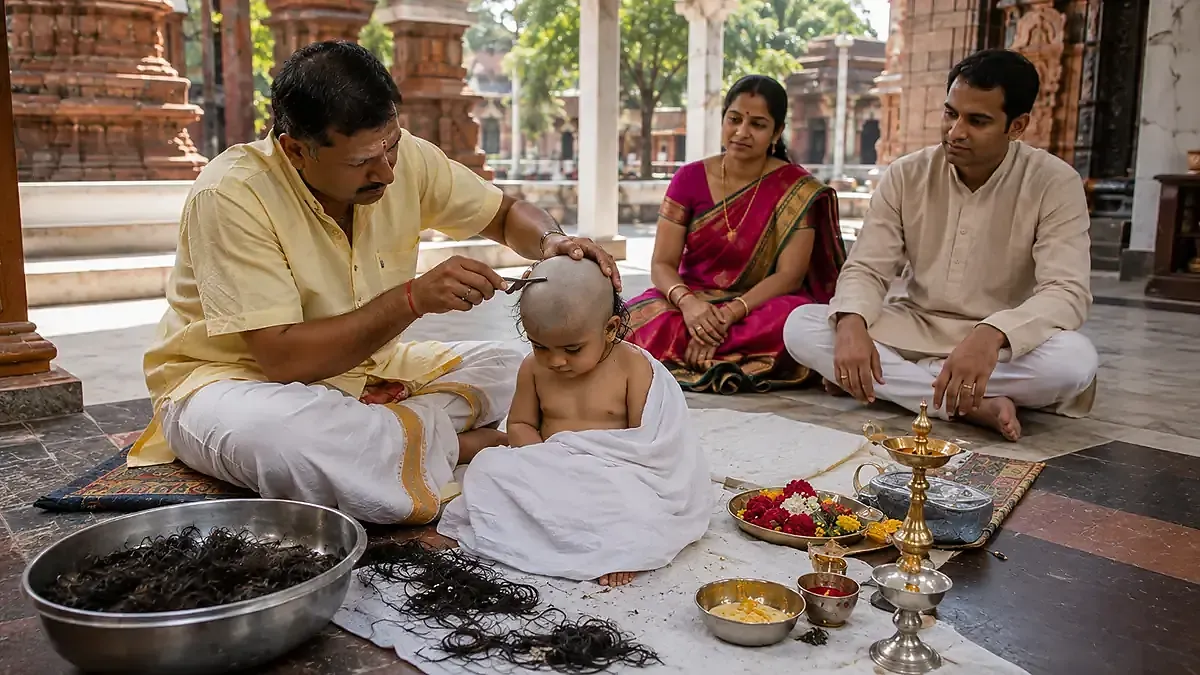
A Mundan puja samagri list must prepare for the haircut itself. Regular worship materials will not cover the practical requirements around the child. Keep a new razor or scissors, comb, clean towel, fresh clothes, and a cloth or container for the removed hair. Bathing arrangements may also be needed once the haircut finishes. Confirm the barber separately from the Pandit booking. Hair handling can also differ by ceremony location and family practice.
Namkaran Puja Samagri List
A Namkaran puja samagri list should support the naming ritual and the baby’s comfort. Useful additions can include fresh baby clothes, a rice-filled writing plate where followed, a writing implement, and the finalized name spelling. Keep the child’s birth details available for the Pandit. Havan materials belong on the list only when havan forms part of the selected ceremony. Honey may appear among traditional ritual ingredients. Ritual use should never become feeding advice for an infant. Children younger than twelve months should not consume honey because it can cause infant botulism.
Vastu Dosh Puja Samagri List
Vastu Dosh puja samagri depends on the remedial ritual selected. A dedicated Vastu Shanti puja samagri list can include materials absent from a normal house-entry ceremony. Distinctive requirements can include a Vastu Purush setup, Vastu mandala or yantra, Navadhanya, Navagraha materials, direction-specific offerings, samidha, and dedicated havan supplies. Griha Pravesh and Vastu Shanti should therefore keep separate checklists. The first addresses entry into the home, whereas the second follows a dedicated property ritual that may include remedial worship and a longer havan.
Saraswati Puja Samagri List
A Saraswati puja samagri list becomes distinctive when objects connected with learning enter the worship setup. Books, notebooks, pens, musical instruments, and art tools can be placed near the deity according to family practice. Families may also arrange a Saraswati image or murti, white or yellow flowers, and matching altar cloth. Vidyarambha traditions can add a writing slate or other learning materials. Students can select the books and tools they actually use.
Have a Different Pandit List? Send It to Kashishakti
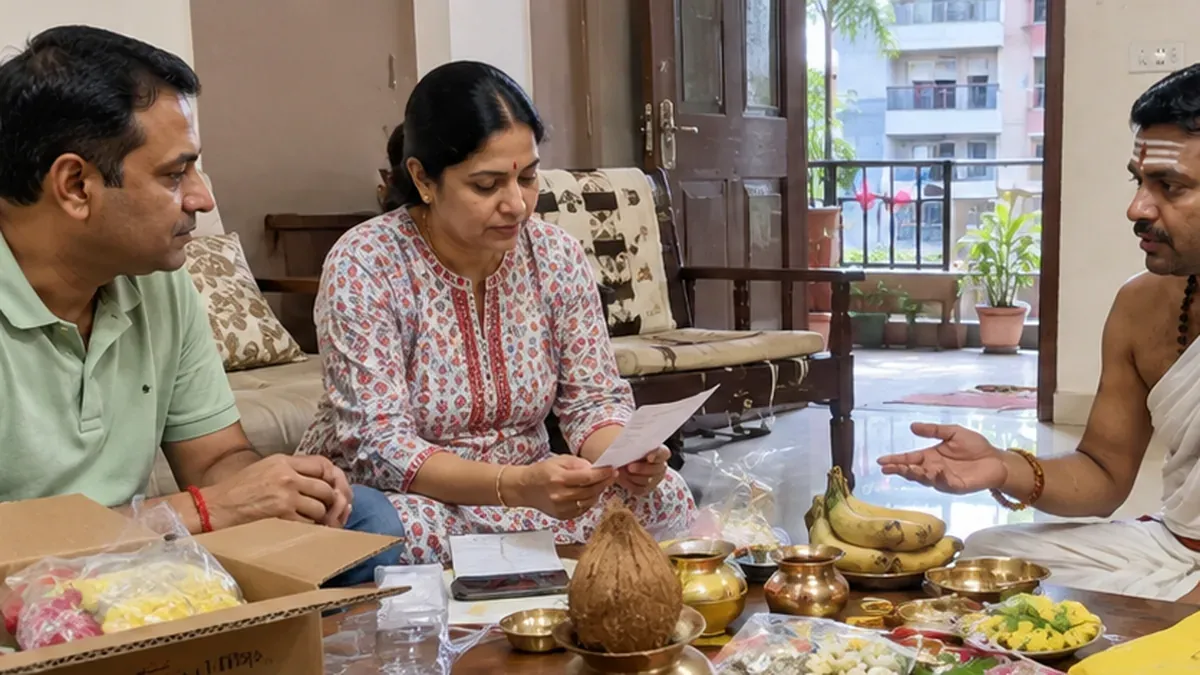
A complete puja samagri list can change once the Pandit confirms the exact ceremony. Kashishakti allows families in Noida to send the list they already have instead of rebuilding an order from a generic kit. You can share a handwritten photograph, document, or typed list. Kashishakti checks the entries, sources the requested materials, and flags unavailable items before confirmation. Confirmed samagri orders in Noida are currently listed for delivery within 24–48 hours. Kashishakti also provides an itemised WhatsApp quote within two hours for uploaded Pandit lists. This service can also reduce the effort involved in finding puja samagri online across several ceremony-specific requirements.
Upload your Pandit’s list: Upload Samagri List Link Ask Kashishakti on WhatsApp: Kashishakti WhatsApp Link Book a Pandit: Book Pandit Form Link
Use One Final List on Puja Day
Everything bought earlier should come down to one checklist by the morning of the ceremony. Keep the puja samagri list beside the setup and verify the items before the Pandit begins. Your complete puja samagri list should contain the final requirements for this puja, including anything added later. Once that is done, the family no longer needs to think about unfinished preparation.