Key Takeaways
- Set the walking pace around the family member who needs the greatest physical support.
- Choose travel dates after checking current weather, pilgrimage advisories, holidays, and festival crowds.
- Complete registration and collect each traveler's RFID access card before starting from Katra.
- Match walking or paid assistance to each person, then verify service availability near departure.
- Protect the descent with a separate plan and a generous buffer before onward travel.
The Family Can Only Move as Fast as Its Slowest Member
A Vaishno Devi yatra with family can unravel when the itinerary is built around the quickest walker. An older parent may need longer rests, a child may tire before Adhkuwari, and a booked service may stop during poor weather. Train tickets and a Katra hotel solve the easy part. The family still has to plan registration, the climb, Bhawan formalities, and the return without pushing anyone past a safe pace.
Start With the Family Member Who Cannot Rush
Plan around the person who needs the slowest pace. Even with transport assistance, parts of the Vaishno Devi yatra may require walking, standing, and waiting.
Check Walking Capacity Before Choosing the Route
Ask each person what they can manage on an uphill path. Consider walking distance, standing time, daily medicines, recent injuries, breathing trouble, poor balance, and earlier problems on slopes.
Agree on Breaks and a Stopping Point
Fix the rest points before leaving Katra and choose a place to review everyone’s condition. If someone cannot go farther, one adult should wait with them while the family coordinator arranges assistance.
Choose the Yatra Date by Crowd and Weather
Cold weather may suit some families, while others may struggle with it. Rain and heavy crowds can be equally tiring. When deciding the best time to visit Vaishno Devi, read the weather forecast and the latest notice from the Shrine Board. Navratri, school vacations, public holidays, and long weekends draw larger crowds. Rooms and paid travel services may sell out, and queues can move slowly. Give the family time to rest in Katra after an overnight train, early flight, or long drive. Begin the climb after everyone has eaten, had water, and slept.
Decide How Each Person Will Reach Bhawan
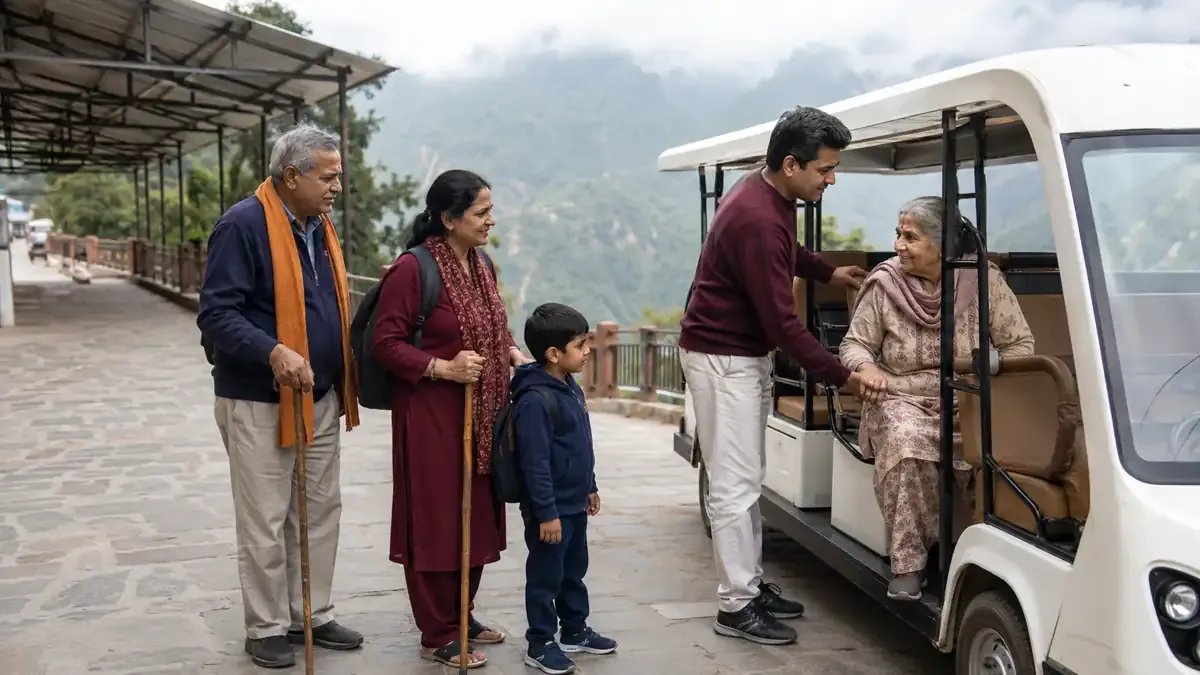
Do not assume that booking a ride removes the walk. Ponies, palkis, battery vehicles, and helicopters use separate boarding and drop-off points. Check both ends of the journey before paying. This detail is important during a Vaishno Devi yatra for senior citizens because the last stretch may still need to be covered on foot.
Match the Travel Mode to Each Family Member
Let each person choose what their body can manage. An older parent can take assisted transport while other relatives walk, provided everyone knows where to meet. For every service, note the boarding place, documents needed, who can use it, and the walk that follows.
Keep a Backup if the Booked Service Stops
A ticket does not guarantee that the service will run. Bad weather, maintenance work, or an operating restriction may stop it for a time. Look at the official update before setting out, keep money aside for another approved option, and name the place where the family will wait.
Finish Registration and Bookings Before Packing
Complete the paperwork before packing the bags. Everyone entering the track needs Vaishno Devi yatra registration. Each traveler must also collect the radio frequency identification, or RFID, Yatra Access Card before entry.
Complete Yatra Registration and RFID Formalities
Check the Shrine Board’s latest instructions before the family reaches Katra. Enter every traveler’s name exactly as it appears on the identification being carried. Allow time in Katra for registration and card collection before starting the journey.
Use Official Channels for Paid Services
Use the Shrine Board’s official portal for rooms and paid travel services. Recheck the fare, available quota, reporting instructions, and service hours shortly before leaving. Keep a screenshot or downloaded copy of every booking confirmation.
Break the Route Into Manageable Checkpoints
Break the climb into short parts. Keep Banganga, Adhkuwari, Sanjichhat, and Bhawan in the plan. The walking distance may change if the track changes, a route is diverted, or a ride starts elsewhere.
Decide Where the Family Will Rest
Rest where the family can find what it needs. Shrine Board information lists rest halls near Adhkuwari, Sanjichhat, and Bhawan. Food, toilets, and medical help are available at key points.
Keep the Walking Plan Flexible
Keep the timing loose during the climb. The track may get crowded, rain may slow movement, and a booked ride may arrive late. Someone may also need a longer rest. Leave the stop when everyone feels ready to walk again.
Save Enough Energy for Darshan
Reaching Bhawan does not complete Vaishno Devi darshan. Depositing belongings, removing footwear, passing security, and waiting in line require additional energy and time.
Allow Time for Lockers, Footwear, and Queues
Cloakroom use, crowded counters, changing queues, and security procedures can delay darshan. Follow directions displayed at Bhawan and prepare required items before approaching the controlled area.
Pick a Regrouping Point Before Entering the Queue
Choose a clear, permitted landmark outside the controlled queue and a second point near the descent route. Children should remain beside one named adult throughout.
Pack for the Hill Rather Than Katra
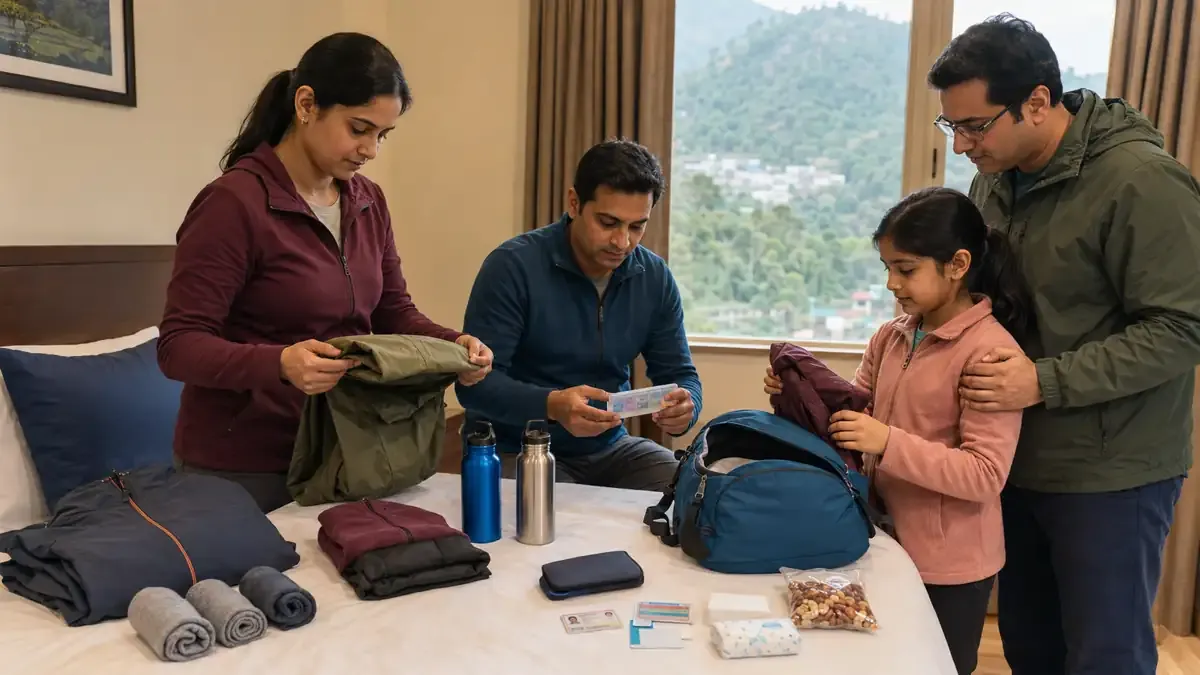
Bhawan can feel colder, wetter, or windier than Katra. Check the hill forecast and prioritize weather layers, rain protection, secure walking footwear, and dry socks.
Give Every Person Their Own Essentials
Each adult should carry identification, daily medicines, emergency details, and a weather layer. Place a child's identification and contact information in a secure pocket.
Keep the Main Bag Light and Accessible
Keep frequently used items near the top of one compact bag. Leave bulky luggage at the hotel or an authorized cloakroom instead of carrying it uphill.
Plan the Descent Before Beginning the Ascent
Tired legs can make the return harder. Decide who may need assistance downhill, where the group will reunite, and who will accompany a slower traveler.
Decide the Return Mode in Advance
A service available uphill may be full or suspended later. Recheck its operating status and pickup point before darshan, then preserve a workable alternative.
Keep a Buffer Before the Onward Journey
Avoid placing a train, flight, or long drive directly after the expected Katra return. Weather and queues can overturn estimates, and tired travelers need recovery time.
When Can Travel Assistance Make the Yatra Easier?
Planning support can help families with older adults, young children, first-time pilgrims, or mixed travel modes. Request official booking details, reporting points, alternatives, and cancellation terms in writing.
Vaishno Devi Family Yatra Planning Table
| Decision | What the family should confirm |
|---|---|
| Travel date | Weather, crowd pattern, holidays, and current advisories |
| Registration | Details, identification, and RFID card for every traveler |
| Route | Walking plan, assistance sectors, and meeting checkpoints |
| Stay | Recovery time before the climb and after the return |
| Essentials | Medicines, identification, weather layers, and water |
| Return | Descent method and a buffer before onward travel |
Keep the Darshan at the Center of the Journey
A workable family plan leaves room for slower steps, changing weather, queues, and service disruption. Confirm the official requirements near departure, protect rest on both sides of the climb, and let each person use the support they need. Careful pacing keeps the pilgrimage focused on darshan and shared time rather than exhaustion or a missed connection.