Before Your First Round
- Confirm the mantra you plan to repeat before picking up the mala.
- Count or inspect the beads if the strand looks damaged or incomplete.
- Find the larger guru bead that marks the boundary of each round.
- Learn the hand method followed within your family or devotional tradition.
- Choose a clean pouch or container for the mala after the session.
The Mala Makes Sense Once You Understand Its Parts
A japa mala can raise questions before the first mantra is spoken. The strand may contain 108 counting beads, a larger bead, a tassel, and smaller separators made from several materials. Online instructions may sound universal even when they belong to one lineage. A beginner must identify the parts, learn a dependable method, and recognize when personal guidance is needed.
Look at the Mala Before Beginning the Mantra
Inspect the strand over a clean surface in daylight. Check for loose knots, cracked beads, frayed cord, bent fittings, or a weak tassel. New japa mala beads should move separately. Run the strand gently through the fingers without counting. A catching bead may interrupt the rhythm, while a tight section can strain the cord. Never pull the mala straight to test it. Retain any material and care details supplied with the mala. Seed, wood, crystal, and metal components react differently to moisture and cleaning products.
Find the Beginning and End of One Round
Identify the Counting Beads
A full 108 bead mala commonly uses one bead for each repetition. The number carries devotional significance across Hindu traditions, although its explanations differ. It does not prove a scientific effect. Count the beads when the strand appears incomplete or has been repaired. Metal caps and tassels do not form part of the count.
Locate the Guru Bead
The guru bead is commonly larger or differently shaped. It marks the beginning and end of a round but receives no additional repetition after the other 108 beads. Some traditions call this boundary bead the meru or sumeru. Use the term followed by your teacher or family practice.
Check for Marker Beads
A mala may include spacers, knots, or textured markers that help the hand notice progress. They do not automatically increase the repetition count. Check the maker's description when their purpose is unclear.
Complete the First Round One Bead at a Time
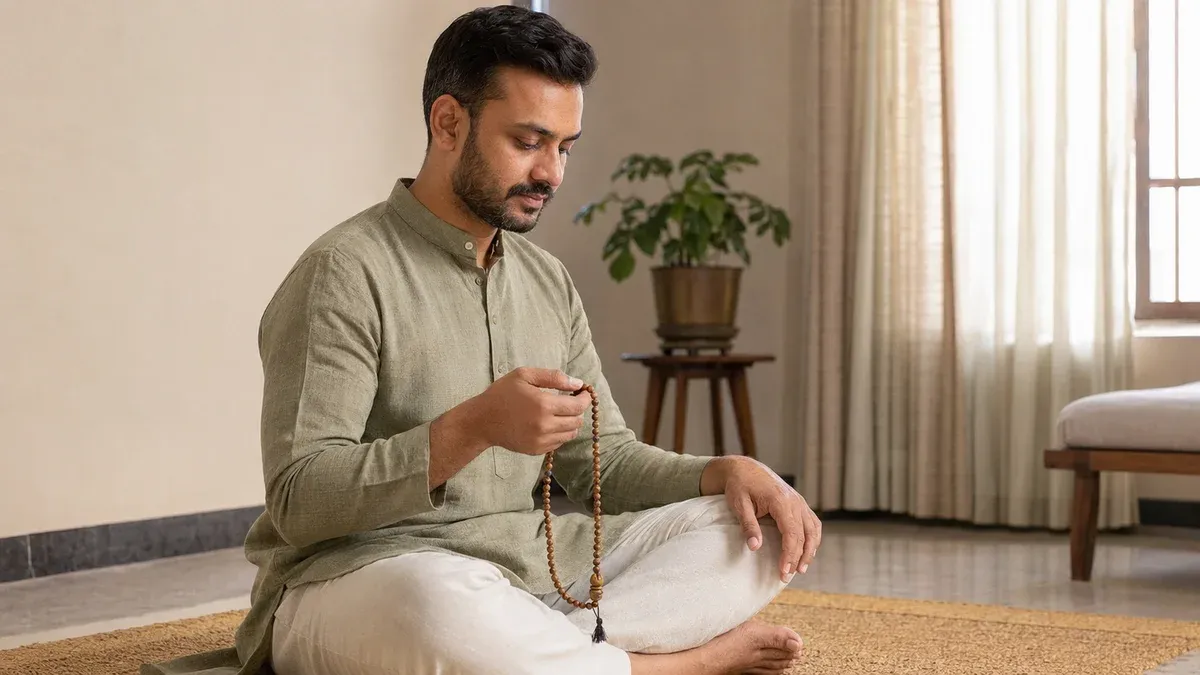
The following sequence gives the clearest answer to how to use a Japa Mala for an ordinary first session.
- Sit in a position that leaves the shoulder, wrist, and fingers comfortable.
- Find the first counting bead directly beside the guru bead.
- Repeat the chosen mantra once without moving the next bead early.
- Draw one bead forward only after the full repetition has ended.
- Continue without tugging the cord or twisting the hanging strand.
- Stop when the guru bead returns to the hand at the round's end. Keep each hand movement small. The bead records one completed repetition, while the mantra remains the main practice. Speeding through the hand movement can cause two beads to pass together or words to merge.
Use the Hand Method Followed by Your Tradition
Many Hindu traditions place the mala over the right middle finger. The thumb draws each bead inward while the index finger remains apart. Other lineages may use another method. Before the first counted session, rehearse the grip for a few moments without chanting. The fingers should move one bead cleanly while the wrist remains relaxed. This check reveals whether the strand, seat, or hand position needs adjustment before attention turns to mantra. Learn any japa mala rules attached to your mantra or family practice. Instructions may cover a cloth bag, hand level, fingers, or direction. General advice cannot replace them. Arthritis, tremors, weakness, or injury may make the common grip difficult. Ask a knowledgeable teacher for a workable adjustment rather than forcing a painful position. Support the forearm when needed.
Turn the Mala When Another Round Begins
After the last counting bead, many traditions direct the practitioner to turn the mala and begin the next round in reverse. The last counted bead becomes the new starting point. Turning avoids crossing the boundary bead. Move slowly because a loose strand can twist. Retain any different method given by your teacher.
Let Accuracy Set the Pace
- Finish the complete mantra before moving to the next bead.
- Reduce the pace when separate words or syllables begin running together.
- Pause and loosen the strand if the thread twists around the fingers.
- End the sitting when discomfort or weak attention affects the repetition.
Put the Mala Away With Care
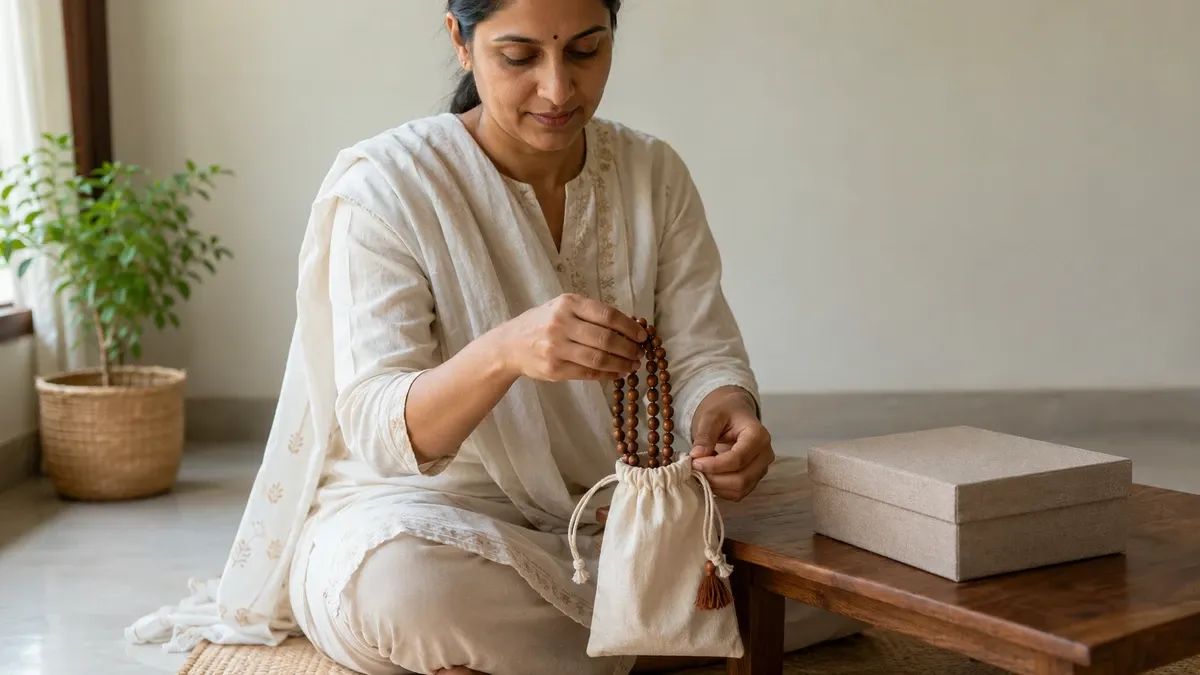
- Place the mala in a clean pouch, box, or covered container after use.
- Keep the thread away from earrings, chains, hooks, and rough drawer fittings.
- Protect wooden and seed beads from prolonged dampness and trapped moisture.
- Examine the cord near the guru bead because that junction may carry added strain.
- Ask before wearing a mala for mantra chanting when it is reserved for japa.
Handle Common First-Time Mistakes Without Panic
Losing count has no universal correction. During informal practice, return to the last certain bead or begin a fresh round. Ask the person who assigned a formal sankalp about its requirements. Tense fingers may move two beads together. Separate them and return to the last clear repetition. Pulling the strand backward quickly can tighten a knot. Beginning on the opposite side does not damage the mala. Stop early when pain, coughing, fatigue, or an urgent interruption arises. Record completed repetitions when following an assigned count.
Ask for Guidance When the Mala Has a Formal Purpose
Confirm the Mantra Before Using the Mala
Some mantras are open devotional chants, while others are received through initiation with prescribed counts or observances. Confirm the wording and instructions before using a new mala for an initiated practice. A seller's product description cannot grant or replace formal guidance.
Check Before Mixing Mantras on One Mala
Families and lineages differ on using one mala for several mantras. Some reserve a strand for one practice, while others permit broader use. Ask before combining practices connected with separate teachers, deities, sankalps, or ritual requirements.
Ask Before Wearing a Japa Mala
A strand used for counting may be kept solely for prayer. Another may be intended for wearing, and some traditions permit both uses under certain conditions. Confirm the purpose before treating a devotional counting tool as everyday jewelry.
In Summary: Let the Beads Support the Practice
A japa mala works best when the hand movement remains simple and the mantra receives full attention. Learn the strand, respect the method attached to your tradition, and care for the beads in a way that keeps daily practice manageable from one session to another.