Quick Takeaways
- Regional terminology can make familiar puja items appear completely different on handwritten lists.
- Quantities should be checked against the Pandit’s instructions before shopping begins.
- A suggested puja item substitute should be verified when the ritual use is specific.
- Generic online lists can help identify puja materials, but should not overwrite ceremony-specific instructions.
- Several unresolved items are easier to handle through one complete list review than separate purchases.
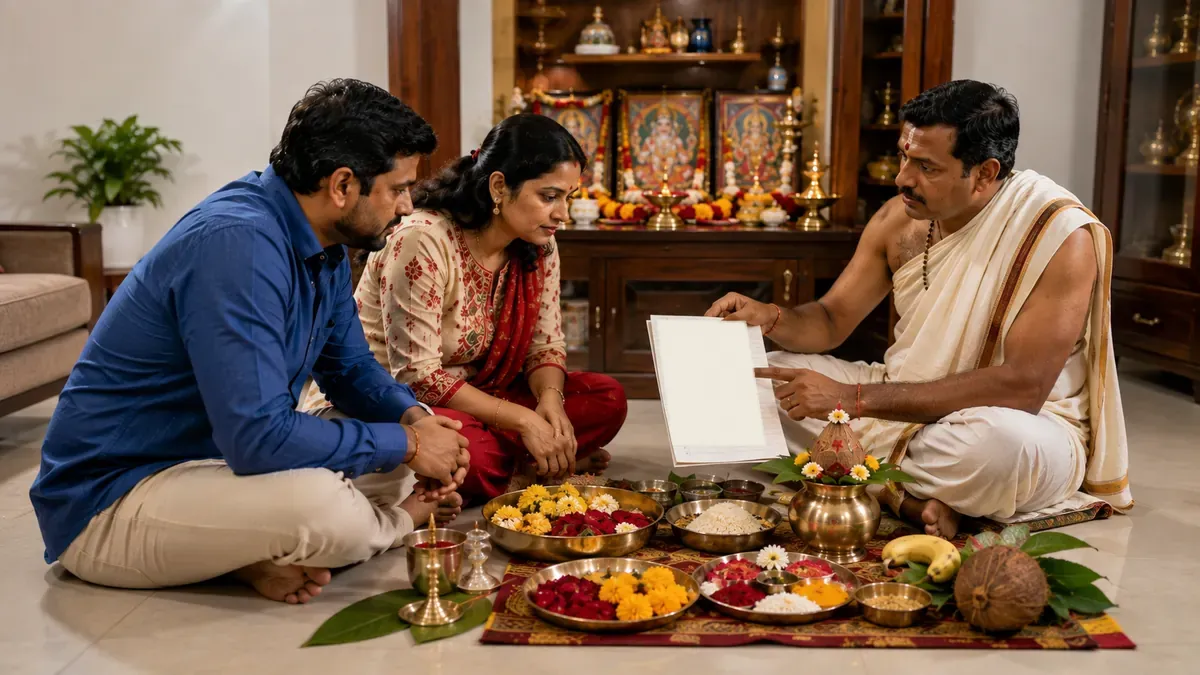
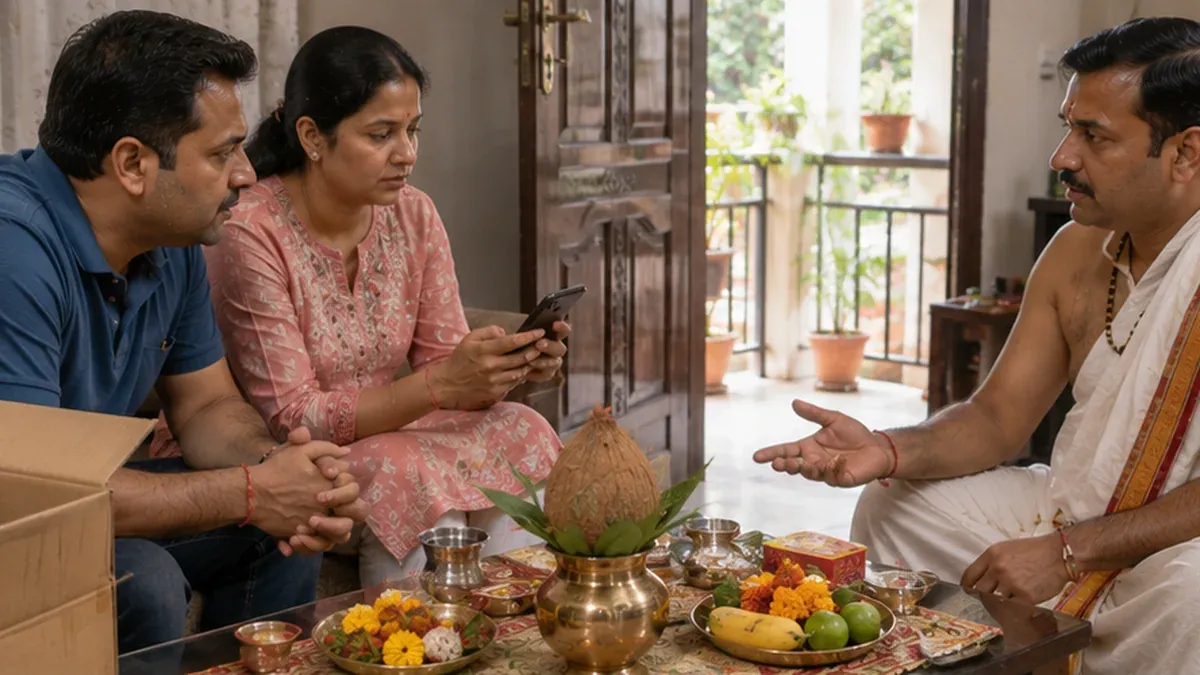
A puja samagri list can become difficult for reasons beyond availability. The handwriting may be unclear, the item may have another regional name, or the quantity may be missing. A shopkeeper may also suggest a replacement that was never discussed with the Pandit. These situations need different responses. Treating every problem as a missing puja item can lead to the wrong purchase. Start by identifying what is actually unclear on the Pandit samagri list. Once the problem is defined, the next step becomes easier and unnecessary substitutions can be avoided.
First Identify What Is Actually Wrong With the List
Before buying anything, identify the exact problem on the puja samagri list. A difficult word needs a different response from an unavailable product. The same applies when the Pandit has not written a quantity.
| Problem on the List | What to Check First |
|---|---|
| Handwriting cannot be read | Isolate the word and photograph that line |
| Item name looks unfamiliar | Check alternate regional or language names |
| Quantity is not written | Mark the entry for quantity confirmation |
| Item cannot be found locally | Record the exact name as written |
| Shopkeeper suggests another product | Keep the original entry for verification |
| Several entries cause confusion | Mark every unresolved line on one copy |
Handwritten lists can create genuine identification problems. Digital pooja samagri list tools now present individual items with names and quantities separately. That format reduces confusion between the item itself and its purchasing detail. Keep one working copy of the Pandit’s list. Mark resolved entries without deleting the original wording. This keeps every unresolved puja item visible for the next check.
The Item May Have Another Name
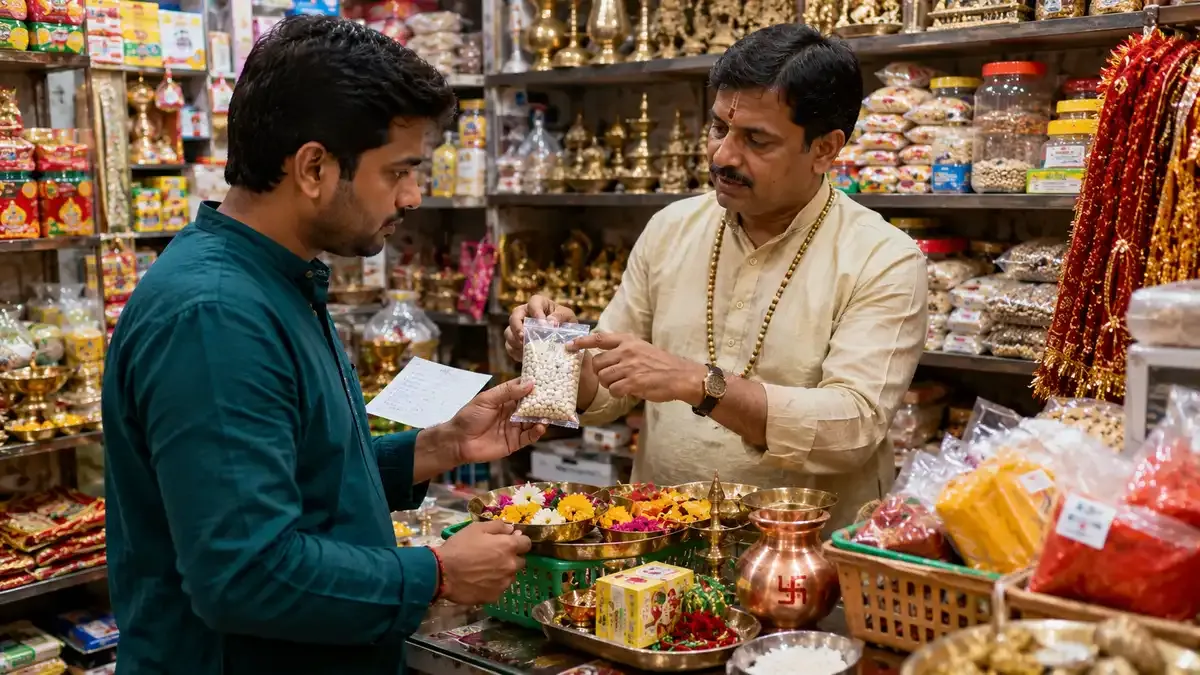
An unfamiliar term does not always mean an unusual puja material. The same item can appear under Sanskrit, Hindi, English, or regional names. Transliteration also changes spellings when Indian-language words are written in English. For example, regional samagri list for puja references use names such as:
- Kusha / Darbha grass for sacred grass
- Samidhalu for homam sticks
- Chembu / Kalasam for ritual vessels
- Akshat / Akshata for unbroken rice used in puja Bilingual samagri references place regional and English names together for this reason. One current Gruhapravesham list, for example, gives Telugu and English names side by side for individual materials. When the name is unfamiliar, keep three details together:
- the word exactly as the Pandit wrote it,
- a photograph showing the surrounding entries,
- the name of the puja being performed.
Context can narrow the meaning considerably. A word appearing beside havan materials may refer to something different from a similar-sounding household item.
Check the Quantity Before Buying
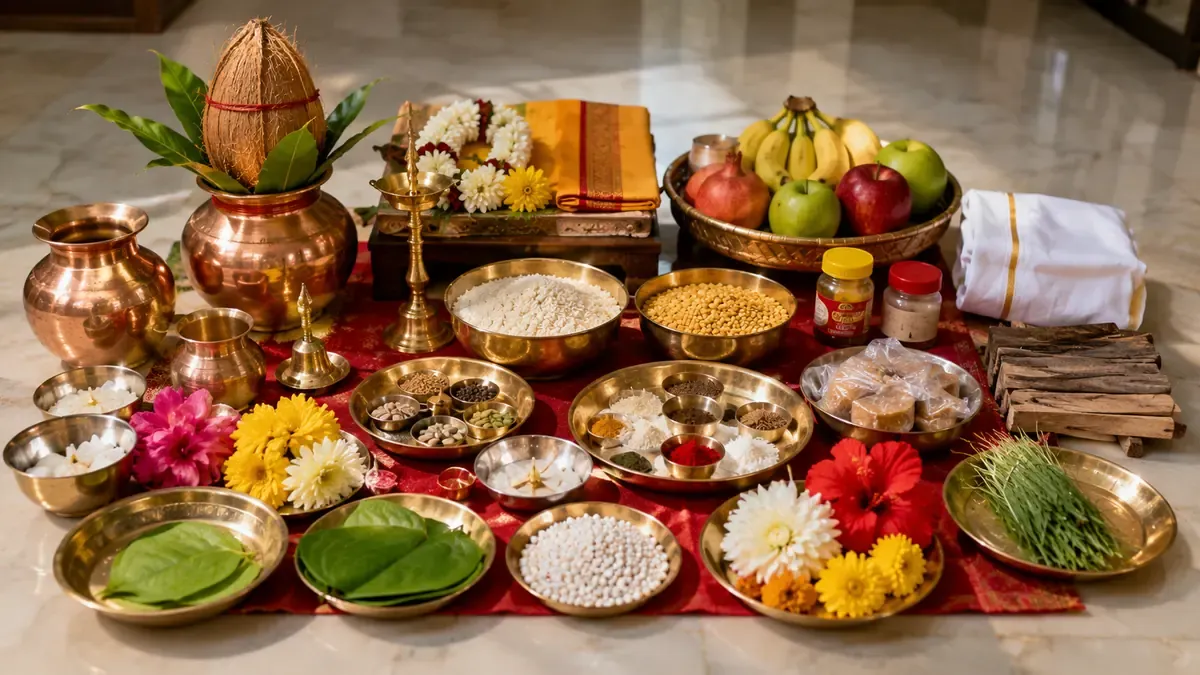
A puja samagri list should tell you how much of each item is needed. The same material may appear in very different quantities across ceremonies. For example, ghee may serve several purposes during one puja. A havan can increase the amount required considerably. Some lists also specify exact counts for leaves, coconuts, wicks, or betel nuts. Read quantity instructions exactly as written:
- 1 packet refers to a packaged unit.
- 11 leaves requires an exact item count.
- 1 set may contain several related pieces.
- 250 grams gives a measurable purchasing quantity.
- As required, it needs clarification for that ceremony.
Standard reference lists also warn that quantities vary by region and family vidhi. A generic web estimate should therefore not replace the Pandit’s figure. When no quantity appears, mark that entry before shopping. Buying a large amount does not solve an unclear requirement.
Can You Substitute a Missing Puja Item?
Sometimes, a puja item substitute is not automatically suitable for every ceremony. The ritual use, family tradition, and selected vidhi determine whether an alternative works. Some everyday offerings have greater flexibility in certain practices. Seasonal fruits or locally available flowers may be accepted in those cases. Other puja materials have a defined role within a ritual sequence. Replacing them changes more than the shopping list. Current guidance on unavailable samagri makes the same distinction. A practical alternative may work for one offering without becoming universally equivalent. For a missing puja item, avoid using a universal replacement chart. A substitute listed for Diwali may not suit Rudrabhishek or Griha Pravesh. Ceremony context should decide whether the original material can change.
When Should You Ask the Pandit Before Replacing Anything?
The safest point to ask is before purchasing a substitute for any ritual-specific material. An unavailable item may have a functional equivalent, but the Pandit should confirm it when the ceremony assigns that item a defined purpose. Do not replace it without checking when:
- It belongs to the** havan samagri** or fire-offering materials.
- A certain leaf, grain, sacred thread, or vessel is specified.
- The quantity is exact, including counts such as eleven or twenty-one.
- The entry is separate from the general puja checklist.
- The substitute changes the method of ritual use.
- The requirement appears in a handwritten addition from the Pandit.
Standard supplies are not the only materials found on ritual lists. Some requirements follow regional customs. Others come from family lineage or the sequence planned for the ceremony. Prepare one detailed message for the Pandit. Name the puja and the item, attach a photograph, and copy the original wording. Mention the shopkeeper’s suggested alternative as well. This avoids a vague exchange and brings the exact replacement under review.
Why Your Pandit’s List May Differ From an Online Samagri List
Two valid puja samagri list versions can differ without either being wrong. Regional custom, family lineage, and included rituals can change individual entries. Havan or homam can also add materials absent from a shorter ceremony. Common reasons for these differences include:
- Regional custom may add specific ceremonial offerings.
- Family lineage may change individual ritual components.
- Included havan can require separate fire materials.
- Optional rites can expand the final list.
- The Pandit’s sequence may require additional setup items.
Current ritual references explicitly note variations across region, lineage, included rites, and family practice. Some lists also mark selected requirements as family-specific instead of universal. An online puja samagri list is useful for spelling checks and item identification. It can also become a shopping tracker before purchase. A samagri list for puja can support identification and shopping. Final ritual instructions should follow the assigned Pandit samagri list.
What Should You Send When Asking About a Missing Item?
For one unresolved entry, send enough context to identify the exact requirement. A cropped word alone may be misleading because nearby entries can indicate its ritual use.
Copy-and-Send Missing Samagri Brief
| Field | Details |
|---|---|
| Puja name | [Add ceremony] |
| Puja date | [Add date] |
| Item as written | [Copy the wording exactly] |
| Photo of the list | [Attach a readable image] |
| Quantity shown | [Add quantity or "not written"] |
| Possible item name | [Add only if known] |
| Shopkeeper suggestion | [Add suggested alternative, if any] |
| Location | [Add locality] |
| Time available | [Add deadline before the puja] |
Keep the original wording visible in the photograph. Do not rewrite uncertain handwriting before sending it. A complete image can also reveal whether the entry belongs with flowers, vessels, offerings, or other puja materials. This format is useful when one line on the puja samagri list needs clarification. It gives the person reviewing the query enough context without reopening the entire shopping list.
Several Items Missing? Send the Full Pandit List
If several items are difficult to find, send Kashishakti the complete list given by your Pandit. You can share a handwritten photo, a document file, or typed text. The list is checked item by item before sourcing begins. Available materials are matched to the Pandit’s requirements, including the quantities mentioned. If any item cannot be sourced, Kashishakti flags it before the order is confirmed. A replacement is not added without informing you. After the review, Kashishakti sends an itemised quote on WhatsApp within two hours. Confirmed samagri orders in Noida can then be delivered within 24-48 hours. This works well when your Pandit has given a ceremony-specific puja samagri list. It also avoids relying on a standard puja kit when the ritual needs different items or quantities. Upload your Pandit’s list: Upload Samagri List Link Ask Kashishakti on WhatsApp: Kashishakti WhatsApp Link
Need the Pandit and materials together? Kashishakti also provides Satyanarayan Pandit in Noida booking with samagri arrangements.