Quick Takeaways Before You Start Shopping
- Keep milk, curd, and other perishables refrigerated until needed.
- Check allergies before adding mixed nuts to prasad.
- Keep liquid offerings away from paper or painted deity images.
- Use a stable metal surface for any open flame.
- Keep one marked copy for additions made by your Pandit.
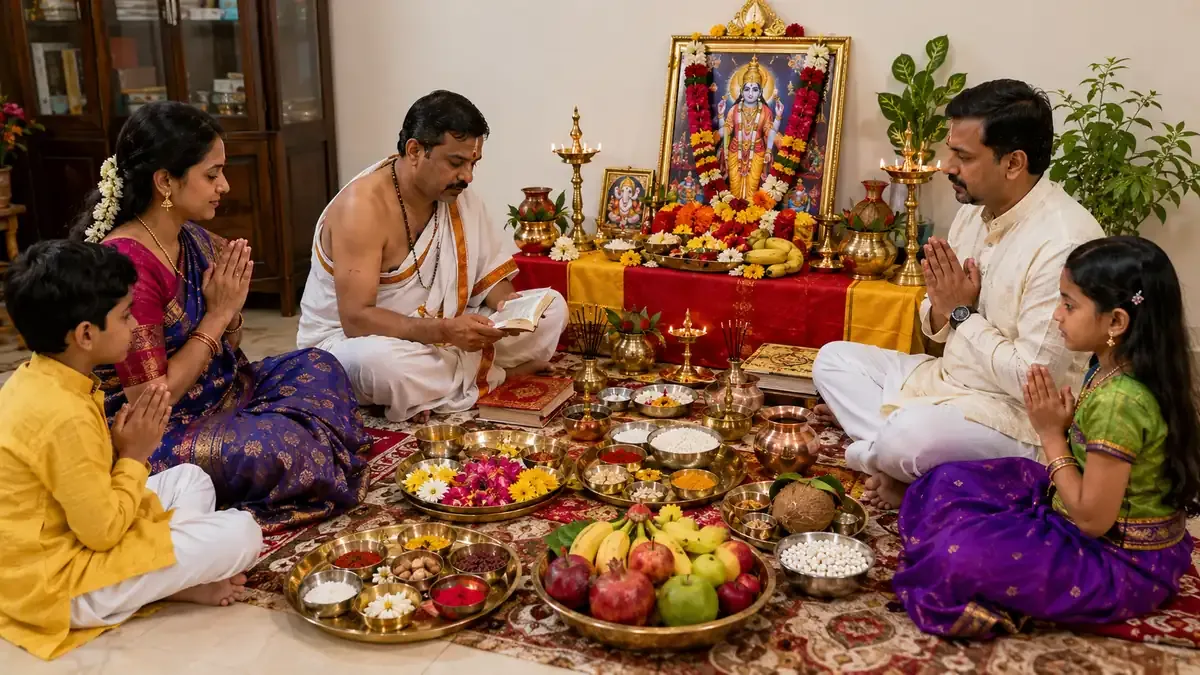
A well-prepared Satyanarayan puja samagri list should answer two things before shopping begins: what you need and how much to arrange. This guide uses practical quantities for a standard household puja, generally planned around 5–10 participants. Not every quantity will be the same for every family. Havan inclusion, regional vidhi, family tradition, and the Pandit’s ritual sequence can change individual requirements. If your Pandit gives a different quantity or adds a specific item, follow that instruction for your ceremony. The sections ahead separate core materials, Panchamrit, prasad, havan requirements, and reusable household items. Items needing Pandit confirmation will also be marked separately, instead of being presented as fixed requirements.
Which Satyanarayan Puja Format Are You Preparing For?
Confirm the ceremony format before using a Satyanarayan katha samagri list. A Katha, full household puja, and puja with havan do not need identical arrangements.
| Puja Format | What the Preparation Covers |
|---|---|
| Katha with core puja | Sankalp, Ganesh prayer, Katha, aarti, offerings, and prasad |
| Full household puja | Wider worship setup, Kalash Sthapana, Katha, offerings, and aarti |
| Puja with havan | Full puja requirements plus fire-ritual materials |
You should not add Navagraha or fire-related materials automatically. They belong in the preparation when the selected vidhi includes them.
Complete Satyanarayan Puja Samagri List With Quantities
The following Satyanarayan puja samagri list with quantity details combines ritual supplies, fresh materials, food ingredients, and reusable items. It can work as your main Satyanarayan puja items list during preparation. The “quantity type” column is important. It separates practical household baselines from entries that need family or Pandit confirmation.
Core Puja and Altar Samagri
| Item | Planning Quantity | Source | Quantity Type |
|---|---|---|---|
| Chowki | 1 | Home | Baseline |
| Yellow or red altar cloth | 1 | Home/Buy | Baseline |
| Satyanarayan or Vishnu image/idol | 1 | Home | Baseline |
| Ganesh image/idol | 1 | Home | Baseline |
| Puja thali | 2 | Home | Baseline |
| Small bowls | 5–10 | Home | Household-based |
| Lota | 1–2 | Home | Baseline |
| Spoons | 2 | Home | Baseline |
| Diya | 1–2 | Home | Baseline |
| Bell | 1 | Home | Baseline |
| Asan | As needed | Home | Participant-based |
| Katha book | 1 | Home/Buy | Baseline |
| Roli | 10–20 g | Buy | Baseline |
| Haldi | 10–20 g | Buy | Baseline |
| Chandan | 10–20 g | Buy | Baseline |
| Akshat | About 250 g | Buy | Vidhi-sensitive |
| Mauli or kalawa | 1 roll | Buy | Baseline |
| Janeu | 1–2 if requested | Buy | Pandit-confirmed |
| Supari | 5–11 | Buy | Pandit-confirmed |
| Laung | About 10 | Buy | Baseline |
| Elaichi | About 10 | Buy | Baseline |
| Panchmeva | About 100 g | Buy | Baseline |
| Ganga Jal | About 100 ml | Buy/Home | Baseline |
| Coins | 5–11 if used | Home | Pandit-confirmed |
| Cotton wicks | 1 packet | Buy | Baseline |
| Agarbatti | 1 packet | Buy | Baseline |
| Kapoor | About 25 g | Buy | Baseline |
These amounts provide a practical household starting point. Published home-puja lists also vary on rice, supari, leaves, coconuts, and several ritual counts.
Kalash, Flowers and Fresh Offerings
| Item | Planning Quantity | Source | Quantity Type |
|---|---|---|---|
| Kalash | 1 | Home/Buy | Baseline |
| Mango leaves | 5 or as instructed | Fresh | Pandit-confirmed |
| Coconut | 1 for the Kalash | Fresh | Vidhi-sensitive |
| Tulsi leaves | 1 small bunch | Fresh | Baseline |
| Loose flowers | 250–500 g | Fresh | Setup-based |
| Flower garland | 1 | Fresh | Baseline |
| Betel leaves | 5–15 | Fresh | Pandit-confirmed |
| Seasonal fruits | 5 types or instructed count | Fresh | Family-dependent |
| Bananas | 5–11 | Fresh | Vidhi-sensitive |
| Fresh sweets | As required | Fresh | Household-based |
The quantity of paan leaves, coconuts, fruit, and similar offerings differs considerably across established puja lists. Keep the Pandit’s written count where one has been provided.
Panchamrit and Shared Food Ingredients
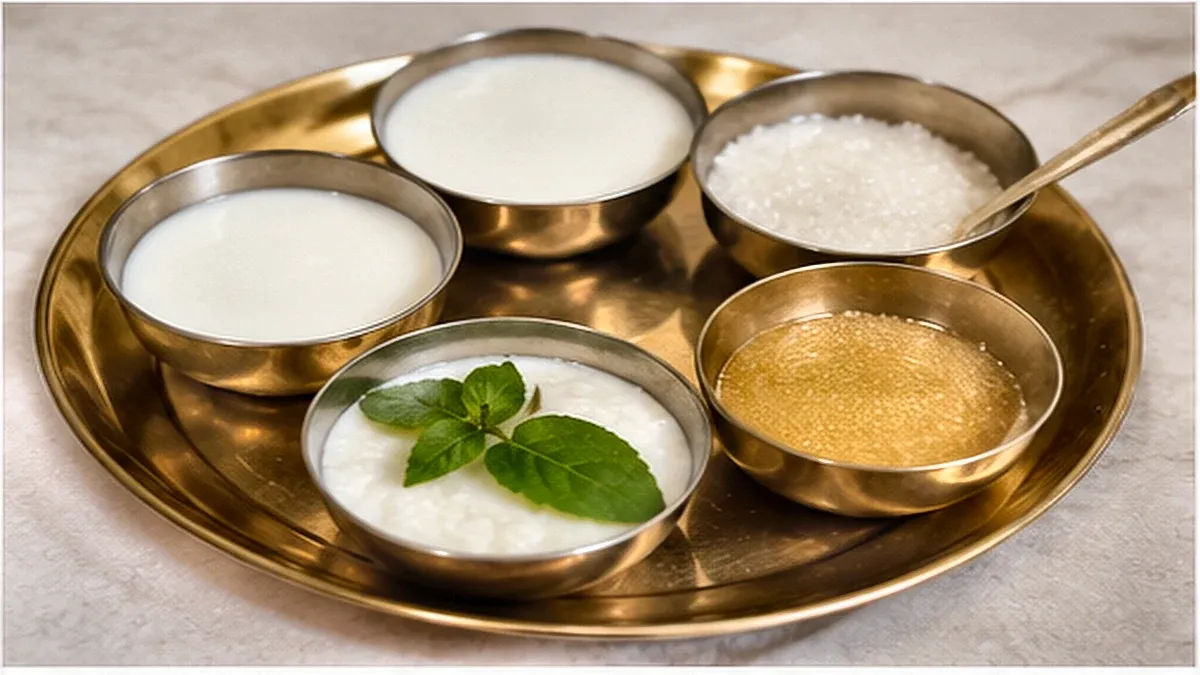
The Panchamrit ingredients are milk, curd, ghee, honey, and sugar. The same kitchen stock can also serve other parts of the ceremony.
| Ingredient | Household Planning Quantity | Main Use |
|---|---|---|
| Milk | 500 ml–1 litre | Panchamrit and prasad |
| Curd | 250–500 g | Panchamrit |
| Ghee | 200–500 g | Panchamrit, diya, and prasad |
| Honey | 50–100 ml | Panchamrit |
| Sugar or jaggery | 250–500 g | Panchamrit and prasad |
For a small household Panchamrit bowl, only a portion of these quantities is required. A practical preparation uses a few tablespoons of each ingredient.
Satyanarayan Prasad Ingredients
The traditional naivedya described in the Satyanarayan Vrat Katha includes ripe banana, ghee, milk, wheat flour, and sugar or jaggery. Rice flour is named as an alternative when wheat flour is unavailable. Add these Satyanarayan prasad ingredients to the same shopping sheet:
| Ingredient | Planning Quantity for a Home Batch |
|---|---|
| Wheat flour | 250–500 g |
| Ripe banana | 2–4 for prasad preparation |
| Cardamom | Small amount, if used |
| Dry fruit | Small amount, if used |
Milk, ghee, and the sweetener are already covered above. Their quantity should not be counted twice during shopping. The Katha also uses the term sapada, meaning one full measure plus one quarter. It describes a ritual measure, not a fixed serving count.
Havan Samagri
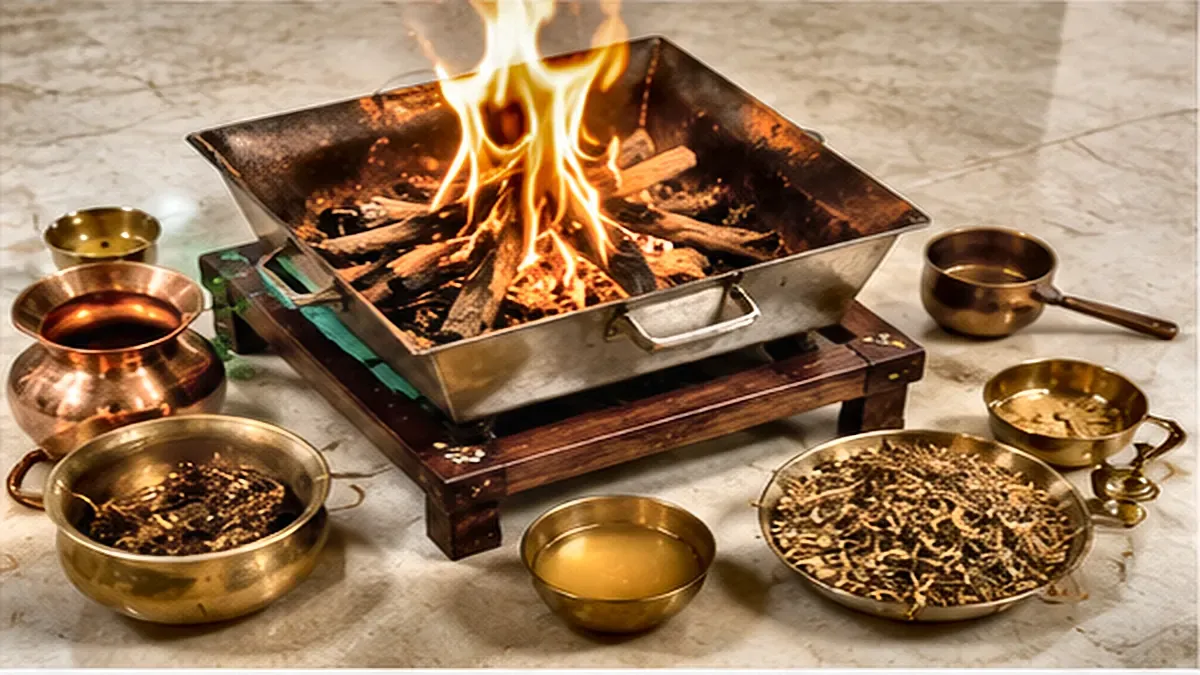
Add havan samagri only when havan forms part of the booked ceremony
| Item | Planning Quantity | Quantity Type |
|---|---|---|
| Havan kund | 1 | Baseline |
| Samidha | About 1 kg | Vidhi-sensitive |
| Havan mixture | 250–500 g | Vidhi-sensitive |
| Additional ghee | 250–500 g | Vidhi-sensitive |
| Long havan spoon | 1 | Baseline |
| Kapoor | Small amount | Baseline |
| Black sesame | About 50 g if requested | Pandit-confirmed |
| Yellow mustard | About 50 g if requested | Pandit-confirmed |
| Navagraha wood | 1 pack if requested | Pandit-confirmed |
| Thick metal tray | 1 | Setup-based |
| Water bucket | 1 | Safety preparation |
Navadhanya, Graha cloth, Navagraha wood, or similar additions should follow the selected havan procedure.
How Should Satyanarayan Puja Quantities Change With Guest Count?
Do not multiply every entry on the Satyanarayan puja samagri list when attendance increases. Different materials respond differently to a larger gathering. Fixed setup items change very little. One kalash, one Katha book, and the main altar arrangement can serve the ceremony without matching the guest count.
Distributed food needs separate planning. Prasad, fruit, sweets, serving bowls, and plates increase as attendance rises. Prepare enough prasad for each person attending the puja. Ritual consumables follow the selected vidhi. A larger family does not automatically require twice the supari, janeu, or sacred leaves. Exact ritual counts can follow the Pandit’s sequence. Havan quantities follow the fire ritual itself. The duration and procedure affect samidha, ghee, and fire offerings more directly than the number of guests. This distinction prevents a common planning error: scaling the entire list from headcount alone.
Why Do Satyanarayan Samagri Quantities Differ Between Lists?
You may find a Satyanarayan pooja samagri list with quantities that differ from another perfectly usable list. The difference can come from the ritual method being followed, not a mistake. Regional paddhati can change individual offerings. Family parampara can add specific materials. A Pandit may include an extended worship sequence, extra kalash work, or a separate havan. Temple and home formats can also use different quantities. The same variation appears in a Satyanarayan puja saman list for coconuts, rice, betel leaves, supari, cloth, and other ritual materials. A generic internet quantity should therefore function as a shopping baseline. Use your Pandit’s figure when an exact count appears on the ceremony-specific list. The Satyanarayan puja samagri list in this guide is designed for preparation, not to replace the vidhi selected for your family.
Get Satyanarayan Puja Samagri Through Kashishakti
You have two practical options when arranging puja samagri in Noida.
Choose a Ready Satyanarayan Puja Kit
A ready Satyanarayan puja kit can cover the standard packed requirements for a known ceremony. Check the included items before ordering, then arrange household and fresh requirements separately. View the kit: Samagri Kits
Send the List Given by Your Pandit
If your Pandit has prepared a different Satyanarayan puja samagri list, send the complete list to Kashishakti. You can share a handwritten photograph, document file, or typed version. Kashishakti checks the submitted requirements before sourcing the order. If an item is unavailable, it is flagged before confirmation instead of being replaced silently. An itemized WhatsApp quote is provided within two hours. Confirmed samagri orders in Noida can be delivered within 24-48 hours. Upload your Pandit’s list: Upload Samagri List Link Ask Kashishakti on WhatsApp: Kashishakti WhatsApp Link