Key Takeaways
- Choose a place that leaves enough room for prayer, cleaning, and normal household movement.
- Measure shutters, shelves, lamps, and wiring rather than checking the mandir's outer size alone.
- Read directions from the floor plan before applying any traditional Vastu preference.
- Keep flames, incense, oil, water, and electrical connections safely separated.
- Use the mandir for a week before adding decoration or approving permanent installation.
The Available Corner May Have Practical Problems
Home mandir placement can look simple until the chosen corner is used. A shutter can strike furniture, incense smoke can collect under a shelf, or a floor unit can narrow a path. A mandir for apartment living requires checks for flames, glass, and loose wires. Tenants need owner consent for drilling, wiring, or cabinetry. An apartment may offer a shared room or narrow wall, which must allow cleaning, movement, and ventilation.
Compare the Available Places Before Choosing One
| Available setting in the home | When this setting may work | What the family needs to check |
|---|---|---|
| A separate room used for prayer | The home has a separate usable room | Ventilation, lighting, and daily access |
| A corner within the living room | The family needs a shared prayer space | Privacy, movement, and nearby furniture |
| A wall-mounted mandir | The room has limited floor space | Wall strength, prayer height, and installation permission |
| A mandir inside a closed cabinet | The prayer area needs protection | Airflow, shutter clearance, and lamp use |
| A movable mandir for flexible placement | The family lives in a rented home | Stability, storage, and safe relocation |
Measure the Unit Against the Chosen Space
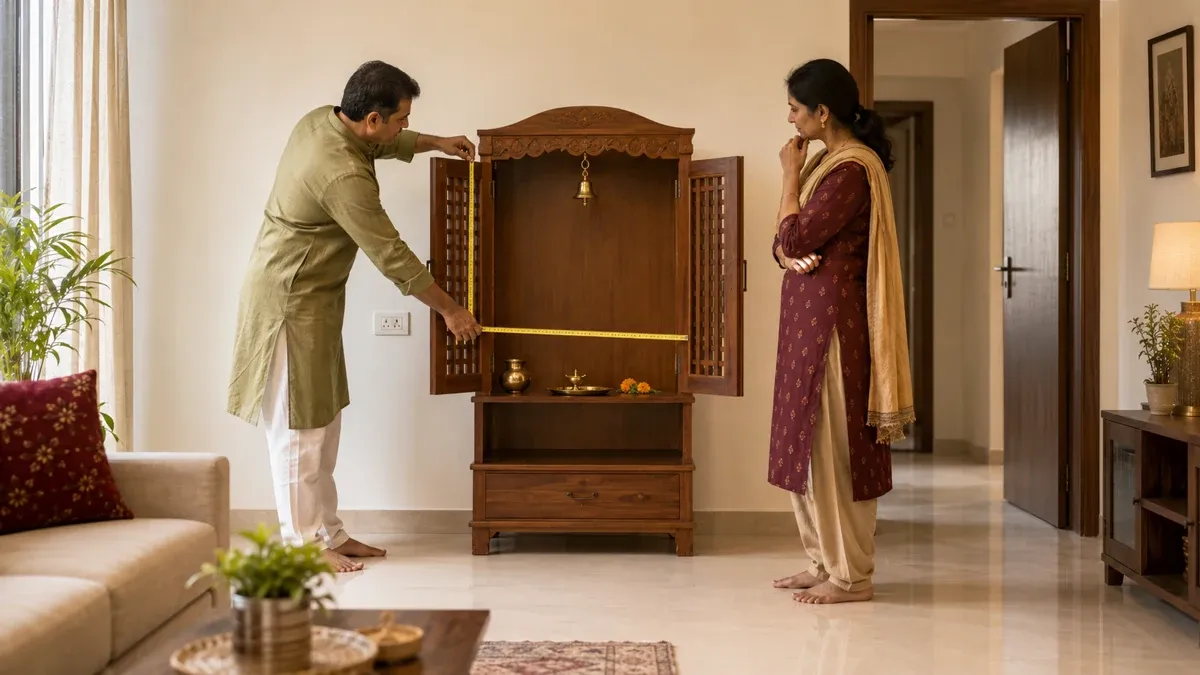
Measure the mandir with every shutter and drawer open. Include the reach of handles, bells, garlands, and sliding trays. Prayer posture changes the calculation. Floor seating requires a different shelf height from standing prayer. A small pooja room design must also leave enough reach to remove each object and clean every shelf without leaning over a flame.
- Check the full swing of doors and shutters against nearby furniture.
- Set the prayer height for the people who will use the mandir.
- Leave enough clearance to reach every surface during cleaning.
- Keep open space around lamps, plugs, decorative lights, and electrical wires.
Check Direction After the Space Passes the Practical Test
Mark the Directions From the Floor Plan
Use the apartment plan or a checked compass reading to mark each direction. Keep a phone compass away from metal objects and electrical equipment. The mandir direction in home plans must come from the prayer area rather than a guess based on the entrance.
Separate Mandir Location From Prayer Direction
Pooja room Vastu guidance commonly favors the northeast, with east or north given as alternatives. Advice differs on the mandir's facing direction and the direction faced during prayer. Record both details, then follow the family tradition or chosen method.
Record What Cannot Be Changed
Mark fixed doors, windows, cabinets, plumbing, sockets, and shared walls. Tenants must check which alterations the lease permits. A directional preference cannot justify unsafe wiring, blocked ventilation, property damage, or an unsuitable wall fixing.
Decide What Belongs Inside the Mandir
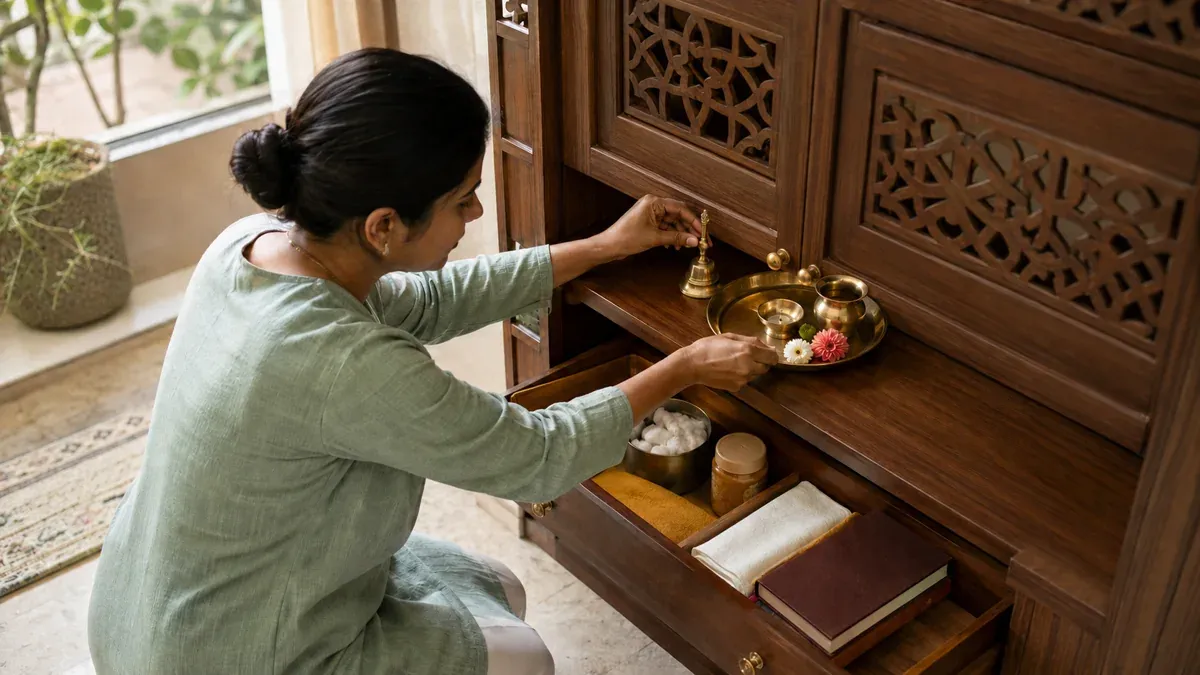
Begin the home temple setup with daily puja items. Deity images or murtis, a diya, incense holder, bell, offering plate, and water vessels need a clear place within comfortable reach. Prayer books, spare wicks, oil, festival decorations, extra vessels, and unopened supplies are better kept in a nearby drawer rather than on the main shelf. An overfilled mandir is difficult to clean. Garlands snag on doors, books pick up oil stains, and objects pushed to the back collect dust or attract insects. Leave enough room to remove each item easily.
Make the Prayer Area Safe for Daily Use
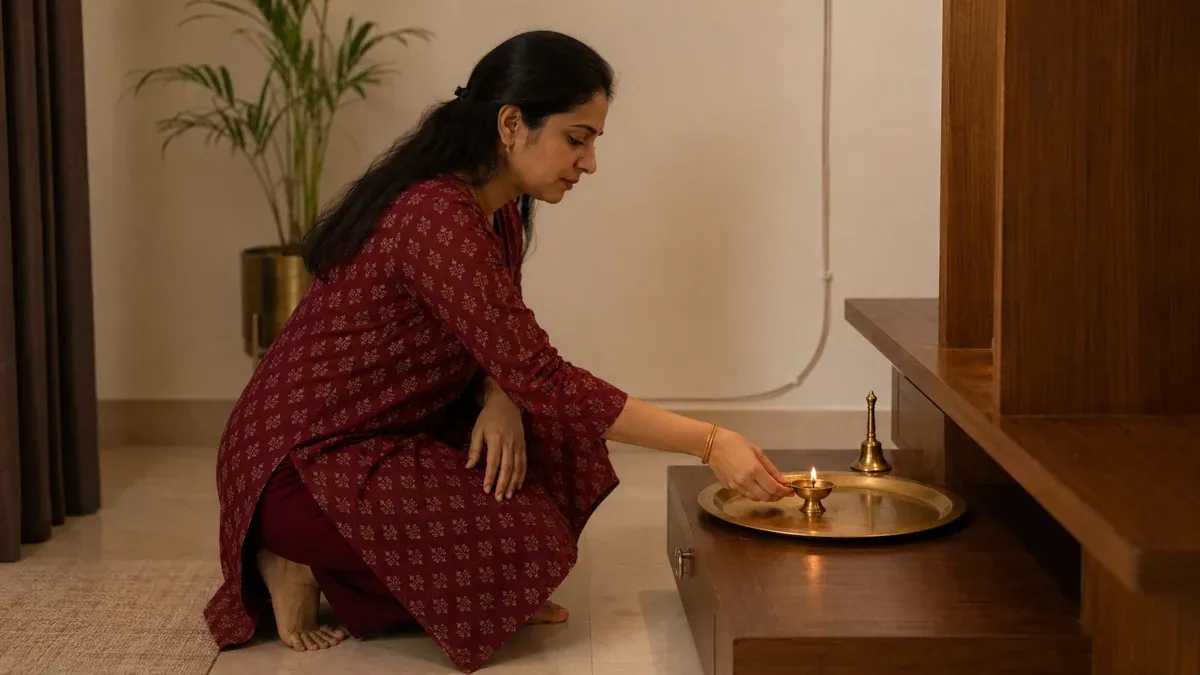
- Use a firm, heatproof stand for the diya so a light touch does not send it over.
- Keep curtains, paper, cloth, garlands, and anything flammable at least 12 inches, or roughly 30 centimeters, from the flame.
- Watch where incense smoke gathers. A small room or enclosed cabinet needs enough airflow before incense is lit.
- Run electrical cords well away from oil, water vessels, and the heated space near the diya.
- Keep matches, glass items, oil, and other breakables where children cannot reach them.
- Clear the space around the mandir so anyone can step back without bumping into furniture or boxes.
Test the Arrangement Through a Week of Daily Puja
Use the basic setup for seven days before drilling holes or adding decoration. Each person sharing puja should try the space. Differences in height, posture, and reach may reveal a problem. Watch the setup during cleaning and evening puja. A shutter may block light, smoke may mark the upper shelf, or the prayer mat may cross a busy path. Note the problem when it occurs.
- Open and close every shutter without shifting another object.
- Check comfort during both seated and standing prayer.
- Look for smoke marks, trapped odor, or weak airflow.
- Confirm that the back, base, and shelves remain easy to clean.
- Notice if daily supplies have begun spreading outside the unit.
- Check that household movement continues without interruption.
Adjust the Mandir Without Starting the Search Again
Many early problems need a small correction. Change a removable shelf when the prayer height feels awkward. Remove unsafe fabric, improve the room light, or place spare supplies in closed storage. A movable floor unit may need an anti-tip restraint where children can pull its doors or shelves. Wall fixings must suit the wall material and loaded weight. Follow the manufacturer's instructions and consult an installer when the fixing method is uncertain.
Seek Guidance Before Making a Permanent Installation
Personal guidance may be useful for irregular corners, several levels, or conflicting direction readings. Consider it when the unit shares a wall with plumbing, includes inherited sacred objects, or requires custom electrical work. Bring the floor plan, unit dimensions, wall details, and photographs. Any structural alteration, new wiring, or heavy wall mounting must also be checked by the relevant installer or property owner.
Keep the Mandir Easy to Use and Care For
Careful home mandir placement gives the family a prayer area that works within the house they already have. Choose a location that can be cleaned, reached, and used safely, then keep only the adjustments that support the family's regular practice.