Before You Buy or Wear It
- Ask what wood the seller has used rather than relying on the bead color.
- Choose the bead size and total weight for the way you intend to use the mala.
- Treat spiritual protection and planetary effects as traditional beliefs, not guaranteed results.
- Follow a known family or teacher-led practice when wearing instructions differ.
- Check the cord, drilled holes, finish, and return terms before paying.
A Dark Wooden Mala Can Carry Several Different Claims
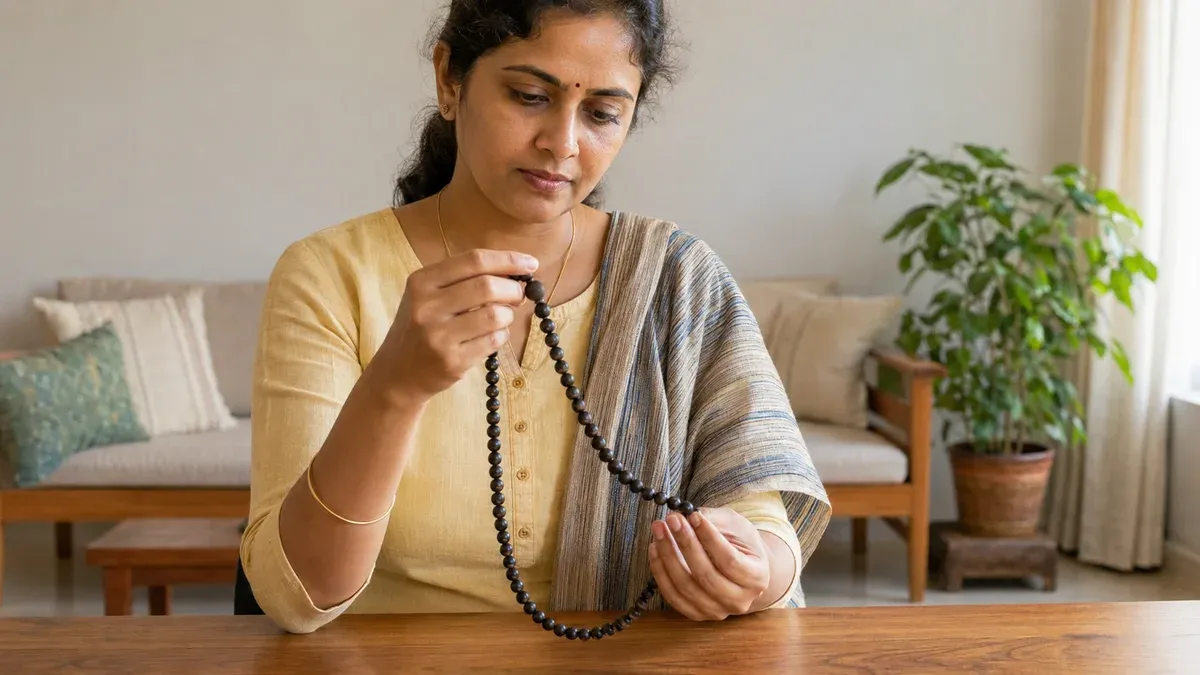
A Karungali Mala may be listed as prayer beads, devotional jewelry, a planetary remedy, or a protection product. Those descriptions can make Karungali Mala benefits sound settled even when the seller has not identified the wood or explained where the wearing instructions came from. A careful purchase begins with separate questions. What is the product made from? Will its weight and cord work during an ordinary day? Which instructions belong to a family or devotional tradition? The answers are more useful than a long list of promised outcomes.
First Find Out What the Seller Means by Karungali
Karungali is commonly associated with dark ebony wood in Tamil usage. Ebony, however, is a trade description used for dense, dark wood from several species in the Diospyros genus. Diospyros ebenum is an accepted species native to parts of southern India, Sri Lanka, and the Andaman and Nicobar Islands. A finished black bead cannot establish its botanical species. Dye, coating, polish, lighting, and photography can alter its appearance. The phrase ebony wood mala tells the buyer what the product is claimed to contain, but it does not provide independent proof. Ask for a material description, country or region of origin, bead measurements, and a clear invoice. Responsible sourcing also deserves attention because ebony is valuable timber and its cutting, transport, or trade may be regulated under state forest laws.
Understand the Product Before Reading the Benefits
- Check the stated wood and ask whether the seller can document its source.
- Record the bead count, bead diameter, mala length, and total weight.
- Run a fingertip around the drilled holes and reject sharp or splintered edges.
- Inspect the cord, knots, spacers, clasp, pendant loop, and finishing points.
- Look for disclosed polish or coating instead of assuming every dark surface is natural.
- Read the return, repair, and replacement terms before removing any product tag. Burning, scratching, soaking, or applying chemicals can damage the mala and still fail to prove the species. A seller’s records and a clear return route provide better purchase protection than a dramatic home test.
Explore our collection of certified and authentic Karungali Malas
Place the Claimed Benefits in Three Different Groups
Traditional Spiritual Beliefs
Karungali is linked in some practices with protection, discipline, courage, grounding, and the influence of Mars. These associations belong to spiritual or astrological tradition. Their wording and prescribed use can differ between teachers, temples, families, and regions.
Practical Devotional Uses
Wooden beads can give the fingers a consistent point of contact during prayer or mantra repetition. A mala may also remind its wearer of a devotional commitment. Those functions are observable without claiming that the wood improves memory, treats distress, or changes a person’s fortune.
Claims That Need Caution
Claims involving disease treatment, immunity, guaranteed wealth, business success, anxiety relief, or complete protection require credible evidence. A spiritual product cannot replace medical care, personal safety measures, financial judgment, or the steady work required in a devotional practice.
Check Suitability Against an Ordinary Day
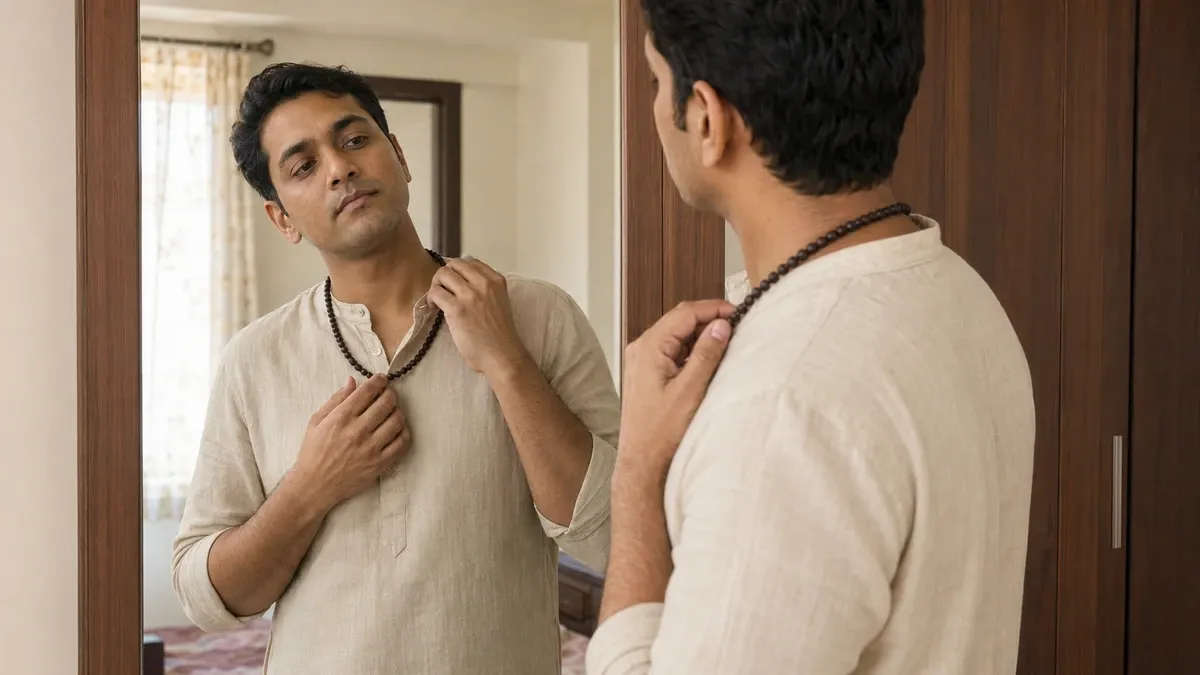
The practical answer to who can wear Karungali Mala begins with the individual and the product. Neck sensitivity, work clothing, heat, perspiration, mobility, and existing sacred threads can affect comfort long before a spiritual rule becomes relevant.
- Compare the mala’s weight with jewelry already worn comfortably.
- Check whether the beads rub the neck or press against the collarbone.
- Notice if the strand catches on collars, scarves, uniforms, or identification cards.
- Remove it before machinery work, contact sports, or any task with a snagging risk.
- Watch for redness, itching, pressure marks, coating transfer, or soreness.
Do Not Turn Seller Instructions Into Universal Rules
Published Karungali Mala rules disagree about the first day of wear, purification, temple blessing, bathing, sleep, food, sharing, and which mantra to recite. These differences show why a product page cannot establish a rule for every wearer. Follow a known family custom or the instruction of the teacher who prescribed the mala. A buyer without such guidance can begin with clean handling, safe wear, and respect for the product while avoiding rituals copied from an unrelated tradition. Claims that women must remove the mala during menstruation or that every wearer must follow the same dietary restriction require tradition-specific context. Do not present a seller’s condition as a rule shared by all Hindu practices.
Men and Women Need the Same Product Facts
Listings for Karungali Mala for men may connect the product with courage, authority, career progress, or physical power. Such promises are promotional unless supported by a clearly identified tradition, and they do not establish what the wood can produce. Marketing for Karungali Mala for women sometimes adds claims about emotional balance, pregnancy, fertility, or hormones. Health conditions require qualified care. Pregnancy advice should come from a healthcare professional and a trusted spiritual guide when the mala is part of a religious observance. Bead weight, strand length, skin comfort, clothing, work, and personal practice are useful for every buyer. Gendered packaging does not change the product’s construction or prove a spiritual result.
Learn How to Wear Karungali Mala From a Known Source
Advice on how to wear Karungali Mala depends on its purpose. Devotional jewelry, a mala reserved for jaap, and a product prescribed under an astrological practice may carry different instructions about prayer, timing, and handling. Ask for personal guidance when the purchase includes a mantra, sankalp, planetary remedy, temple ritual, or lineage-based discipline. Keep the instructions with the product rather than blending them with rules found on unrelated sales pages.
Care for the Wood Without Damaging the Cord
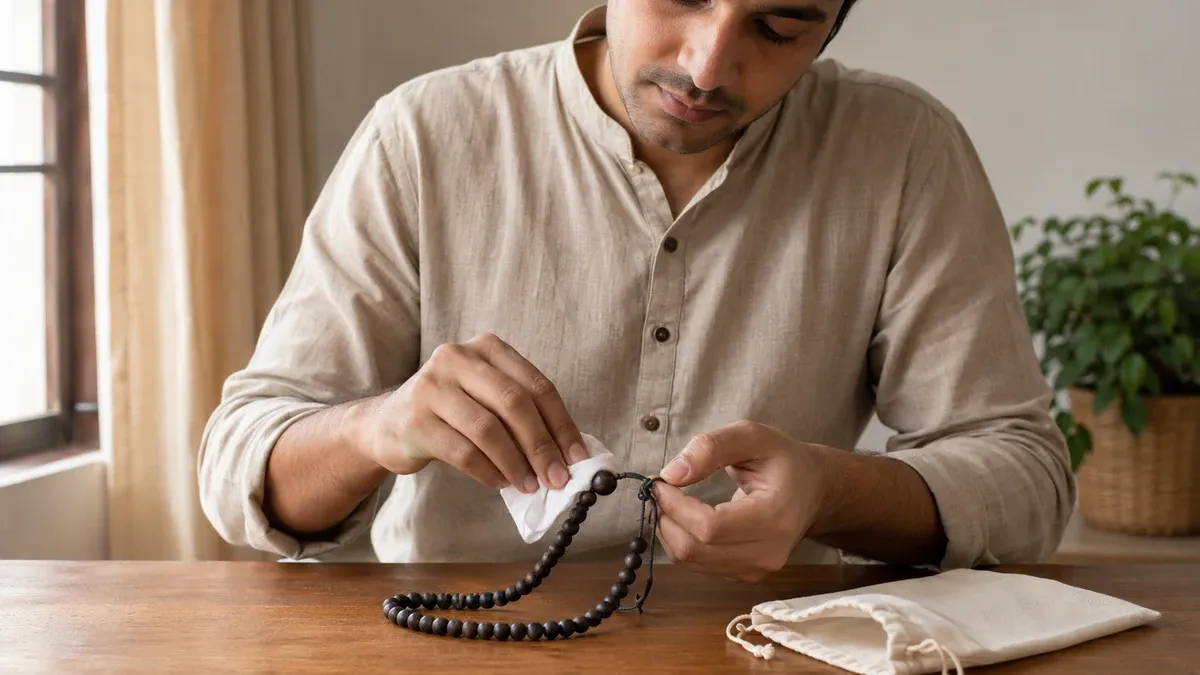
- Wipe the beads with a dry, soft cloth after wear.
- Remove perspiration before placing the mala in storage.
- Keep the cord away from hooks, rough jewelry, and sharp drawer fittings.
- Avoid perfume, detergent, bleach, and strong household cleaners.
- Do not soak the beads as an authenticity test.
- Let accidental moisture dry fully before closing the storage pouch.
- Inspect the thread near heavy beads, spacers, and pendants.
Look for Better Proof Than the Word Original
Phrases such as original Karungali Mala, “temple quality,” “rare wood,” and “energized” need supporting detail. A dark color, heavy bead, woody smell, or claim that the mala sinks in water cannot independently identify the species or its legal source. Check the seller’s identity, material disclosure, close product photographs, measurements, cord description, invoice, sourcing statement, and return policy. Repair support also reveals whether the business expects the product to remain usable after ordinary wear. Keep screenshots of the listing when buying online. They preserve the claims made at the time of sale and make a return or material dispute easier to explain.
Stop Wearing the Mala When the Product Creates a Problem
Remove the mala when it causes itching, redness, swelling, pressure marks, neck pain, dye transfer, or persistent soreness. A broken bead, exposed thread, sharp drilled edge, loose pendant, or opening clasp also needs attention before the product returns to use. Clean handling cannot repair damaged construction. Ask the seller or a competent craftsperson about restringing or replacement, and seek medical guidance when skin symptoms persist after the mala has been removed.
Let the Mala’s Use Decide the Purchase
A sound decision about Karungali Mala benefits begins with the product’s material, intended use, comfort, and source of guidance. Choose the mala for a clear devotional or practical purpose, wear it safely, and leave unproven promises out of the purchase decision.