Quick Context Before You Wear One
- The eye symbol belongs to several cultural histories, and their meanings are not identical.
- A secure clasp, sound cord, smooth edges, and suitable materials deserve attention before purchase.
- No single wrist rule applies across every family, region, or spiritual tradition.
- Redness, itching, pressure marks, or swelling are reasons to remove the bracelet.
- Traditional protection claims express belief and do not guarantee health, safety, luck, or financial results.
A Familiar Symbol Can Carry Different Meanings
An evil eye bracelet may be worn because a family follows a protective custom, because the wearer feels connected to the symbol, or because the piece works with everyday jewelry. Those reasons can exist separately. The design alone does not reveal what the bracelet means to its owner. Product pages frequently blend history, spirituality, and sales language into a single story. A useful choice begins by separating those layers. Cultural claims need context, and practical details such as materials, fit, fastenings, and skin contact need their own review.
Separate the Nazar Belief From the Bracelet Design
In South Asian usage, nazar refers to a harmful or envious gaze within a long-standing cultural belief. Families may use a dot of kajal, a charm, a prayer, or black thread for nazar according to their own custom. These practices do not depend on one standard bracelet design. Eye-shaped protective objects also appear in Mediterranean, Middle Eastern, North African, and other cultural histories. Their appearance, language, religious setting, and use differ. An Egyptian wedjat eye, a Mediterranean blue-eye amulet, and a South Asian protective thread should not be presented as interchangeable versions of one object. The clearest evil eye bracelet meaning therefore depends on context. A blue-and-white charm may carry a specific family association for one wearer and function as jewelry for another. A seller’s origin story deserves scrutiny when it compresses several regions and centuries into a neat marketing claim.
Read the Bracelet Before Buying It
Construction affects comfort and service life regardless of the symbolism attached to the piece. Examine the bracelet in your hand, or read the product specifications and return terms carefully when ordering online.
| Bracelet type | Practical advantage | What needs checking |
|---|---|---|
| Adjustable cord | The wearer can alter the fit. | Knot strength and loose ends |
| Elastic bracelet | It goes on without a clasp. | Stretching, cracks, and bead weight |
| Chain bracelet | It has a jewelry-style finish. | Clasp security and metal sensitivity |
| Black thread bracelet | It reflects a familiar nazar custom. | Dye transfer, tightness, and fraying |
| Children's bracelet | The size is made for a smaller wrist. | Choking, snagging, and detachable parts |
Choose the Bracelet for the Person Wearing It
Check Everyday Use for Adults
A bracelet that feels secure in a shop may catch on a cuff, keyboard tray, gym machine, watch, or stack of bangles. Think through the wearer’s day. Repeated exposure to water, sweat, cleaning products, or hard surfaces can weaken thread, coatings, elastic, and glued fittings.
Use Extra Care With Children
Small beads and detachable charms can become choking hazards. Tight cords can mark the skin, while loose loops can snag during play. Adult supervision does not correct a poorly made product. Check the age guidance, inspect every component, and remove the bracelet during sleep, bathing, sports, or unsupervised play.
Treat a Gift as a Personal Choice
A nazar bracelet can be a thoughtful gift when the recipient values the custom or likes the design. Ask first when beliefs are uncertain. Some people avoid spiritual symbols they do not follow, and others prefer jewelry without a protective meaning.
Decide on the Wrist Without Inventing a Universal Rule
Advice about which hand to wear an evil eye bracelet varies widely. Some practitioners connect the left wrist with receiving or personal concerns and the right with action or outward life. Other families make no such distinction, and many people choose according to comfort. Follow an established family or religious instruction when it is part of the practice. Without one, use the wrist that keeps the fastening secure and reduces catching. A watch, work tool, old injury, dominant hand, or skin sensitivity may make the practical choice clear.
Check the Fit Before Wearing It All Day
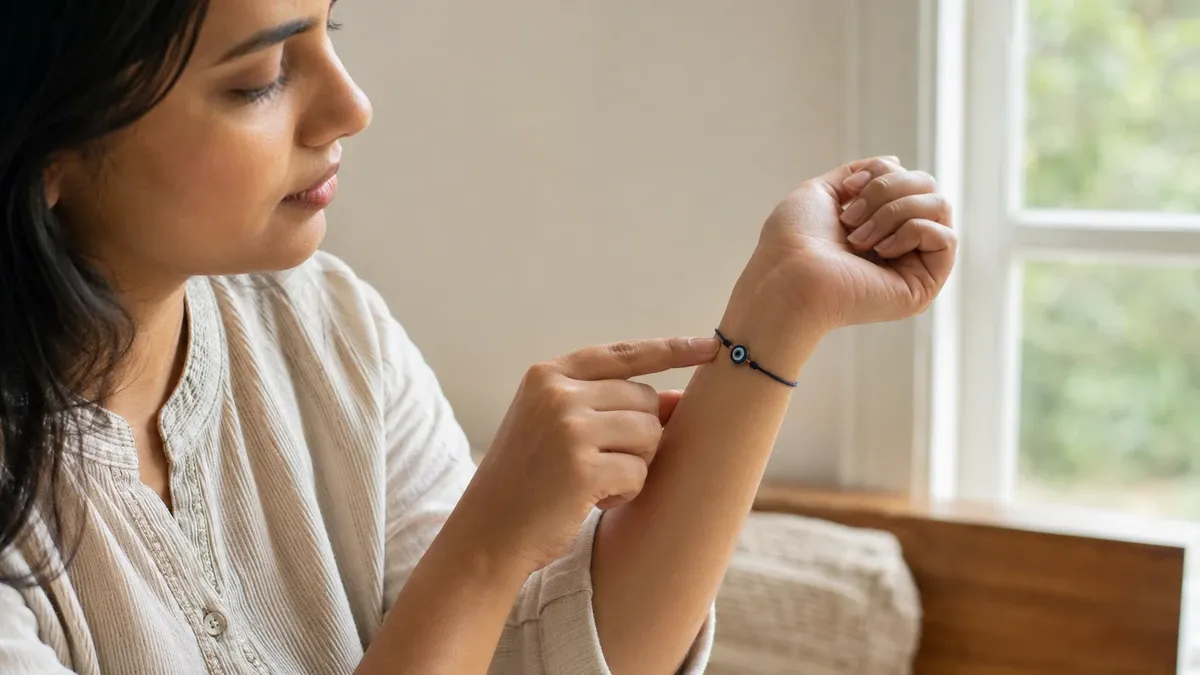
- Place one finger between the bracelet and the wrist without forcing the gap.
- Check whether the charm turns sharply or presses into the skin.
- Move the wrist through ordinary work, dressing, and household tasks.
- Remove the bracelet when redness, itching, swelling, or soreness develops.
- Keep loose cords away from machinery, exercise equipment, and moving parts.
- Recheck the knot, elastic, clasp, and charm after the first full day.
Keep Belief-Based Claims in Their Proper Place
Descriptions of evil eye bracelet benefits commonly refer to protection from envy, harmful attention, or negative influence. These ideas belong to cultural and spiritual beliefs. They cannot confirm that a bracelet will prevent illness, stop anxiety, secure a promotion, protect a business, or block physical danger. A familiar object can still carry personal value. It may remind someone of a relative, a blessing, or a chosen intention. Such reassurance describes the wearer’s experience and should not be recast as medical evidence or a guaranteed result. Health symptoms require appropriate clinical advice. Threats to personal safety need practical precautions and qualified support, while financial concerns require sound decisions rather than a charm. Clear boundaries protect the wearer from exaggerated advertising without dismissing the tradition.
Read a Broken Bracelet as a Practical Warning First
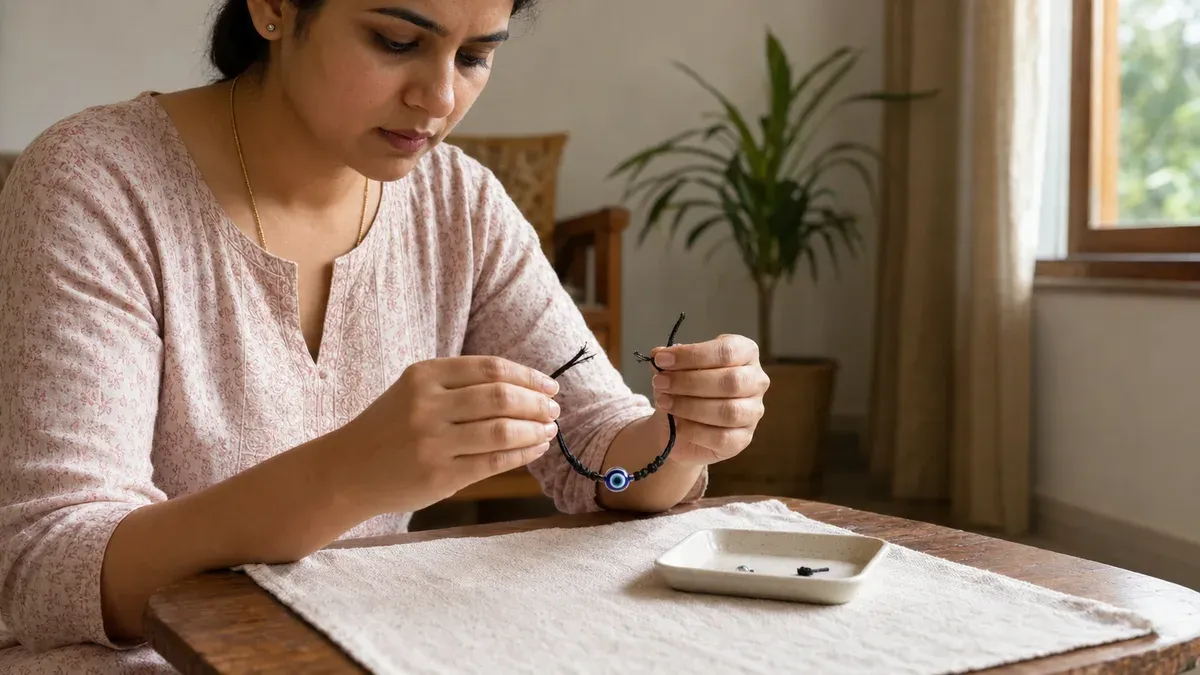
A snapped cord, stretched elastic, open jump ring, loose stone, or failed clasp has a physical cause worth checking. Friction, water, impact, age, and poor assembly can weaken a piece. Stop wearing it until every loose or sharp part has been repaired or replaced. Some families believe a broken evil eye charm has completed its protective role. That interpretation belongs to personal tradition; the damage cannot prove that negative energy was absorbed. Keep any detached part away from children and decide on repair, replacement, or respectful disposal according to the material and custom.
Clean the Bracelet According to Its Material
- Wipe glass beads with a soft cloth that is only lightly dampened.
- Follow the maker’s care directions for plated, coated, or bonded metal.
- Let the wet thread dry fully before placing it against the skin again.
- Avoid perfume, bleach, and strong cleaners when the material is unknown.
- Lay the bracelet flat in storage to protect its charm and fastening.
Seek Guidance Before Following a Prescribed Nazar Practice
Personal guidance is useful when a bracelet is tied during worship, accompanied by a prayer or mantra, selected for a child, or given under a family observance. The person guiding that practice can explain its wording, timing, handling, and any limits relevant to the tradition. A commercial description cannot replace those instructions. Before buying extra charms, combining symbols, or following a ritual found online, check with a trusted family elder, priest, or knowledgeable practitioner who understands the practice being followed.
Wear the Symbol With a Clear Understanding
An evil eye bracelet can carry inherited meaning, personal devotion, or simple visual appeal. Respect the tradition behind the choice, check the piece as jewelry, and reject promises that no bracelet can prove. A secure, comfortable design is easier to wear with confidence and care.